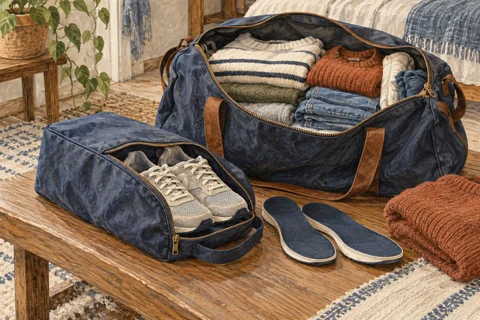
Cleaning a canvas bag without losing its shape
A canvas bag may also contain coatings, leather, stiffeners and glued layers. Clean the complete object, not just the fabric name.
Find out what else is in the bag
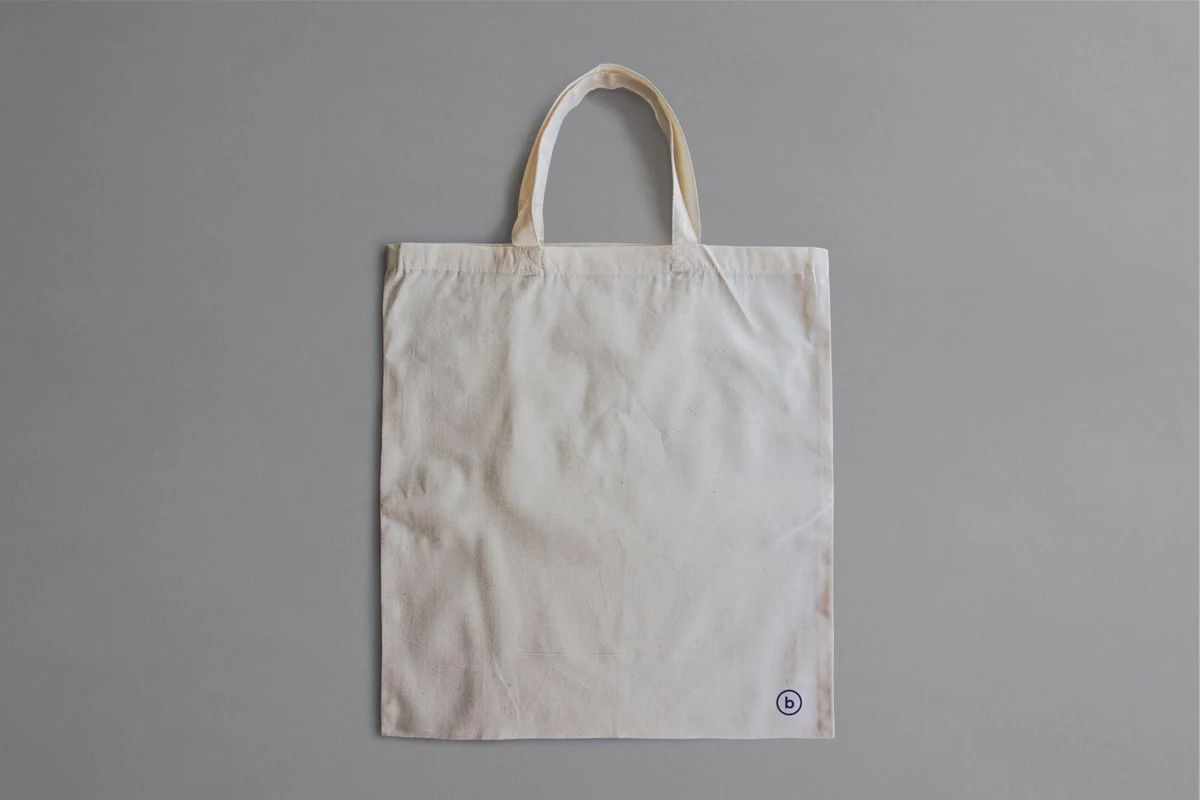
Canvas describes a fabric construction, not a complete care method. A plain uncoated tote and a structured bag with a coated lining, leather handles and a reinforced base may need very different treatment. Read the maker's instructions for the exact bag before putting it into water.
Inspect the inside for a care label and note any removable parts. A rigid base panel may come out, but do not force one that is sewn or bonded in place. Empty every pocket, including small zip sections where coins, receipts or crumbs can remain hidden.
Photograph the bag's shape and any detachable parts if reassembly is not obvious. A few minutes of preparation can prevent a strap or base being returned incorrectly after cleaning. Keep hardware together somewhere dry and separate from the wash area.
Start with loose dirt
Remove loose dry dirt gently using a method permitted for the material. Do not grind grit into the surface while trying to remove it. Check corners and the seam along the base, where debris tends to collect.
For a small mark, see whether the manufacturer recommends spot cleaning. Use only an appropriate product and method, and test discreetly if the instructions advise it. Adding more water or stronger detergent is not necessarily more effective; it can spread a mark or affect a finish.
Bellroy, for example, gives product-specific fabric care instructions and warns against machine washing or soaking its products. That is not a rule for every canvas tote, but it illustrates why a bag's own instructions matter more than a general claim that canvas is washable.
If washing is explicitly permitted
Follow the stated water temperature, detergent and method. Remove components only as directed. Do not assume a hand-wash instruction permits a delicate machine cycle; the action and handling can be different.
Keep pale and strong-coloured items separate as their labels require. A printed design or contrasting trim may behave differently from the main cloth. Avoid soaking an unfamiliar bag for a long period in the hope that a stain will disappear without further work.
Rinse or remove cleaning residue as instructed. A bag that feels stiff or looks marked after drying may have retained product, but do not immediately repeat the process with another chemical. Check the original method and ask the maker if needed.
Support the shape while drying
Dry the bag in the manner the manufacturer specifies. Where air drying is permitted, open the compartments and arrange the bag so damp layers are not pressed together. Keep it away from direct heat unless the instructions expressly allow that treatment.
If light support is appropriate, use clean material that will not transfer colour and do not overstuff the bag. Heavy wet fabric should not be hung from a small decorative loop that was never intended to carry it. Check the base, handles and seams before deciding it is fully dry.
Do not put a damp bag back into a wardrobe or fill it for tomorrow's commute. The outer cloth may dry before the lining or reinforced base. Leave adequate time, particularly during humid weather, rather than relying on a surface touch alone.
Know when to stop
An old stain may not be removable without changing the surrounding colour or finish. Repeated aggressive cleaning can turn a small mark into a much larger damaged area. For a valuable or sentimental bag, seek advice from a cleaner familiar with its construction.
After cleaning, inspect the stitching and closures before carrying the normal load again. If the bag has lost its shape or a reinforcement has shifted, address that issue before filling it. A little ordinary wear is often less troublesome than damage caused by treating a multi-material bag as a plain piece of cloth.