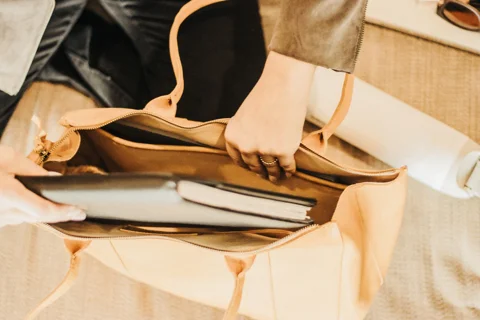
On the go
A commuter tote with room for the awkward things
Try the shape with a lunchbox, bottle and the other objects that refuse to lie flat.
Bags and small things that travel with you.
Try the shape with a lunchbox, bottle and the other objects that refuse to lie flat.
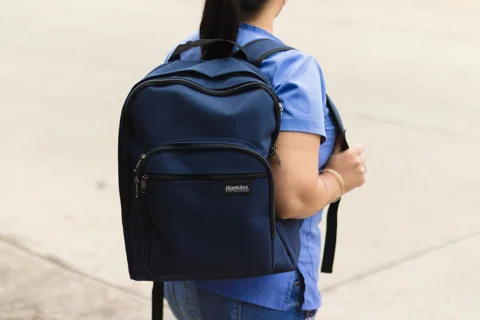
Capacity tells you what might fit inside. A loaded try-on tells you more about carrying it.
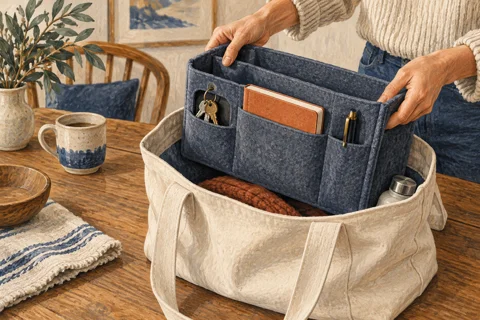
An insert should make objects easier to reach without using up the space they need.
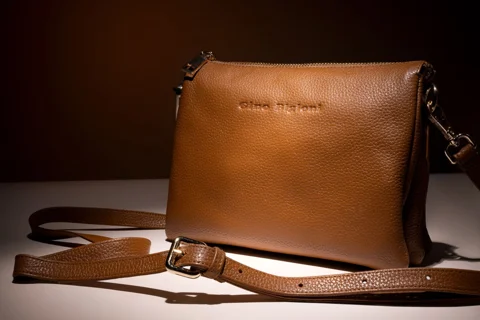
Check the usable adjustment range with the bag loaded and over the clothing you wear.
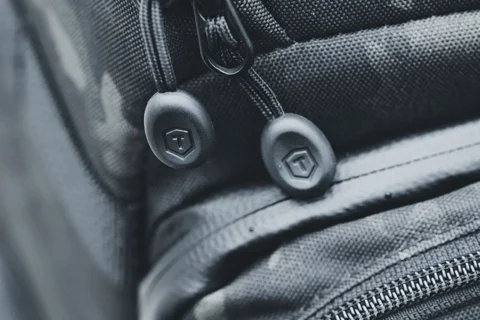
Open the bag as you would during a journey. The route of the zip matters as much as its appearance.
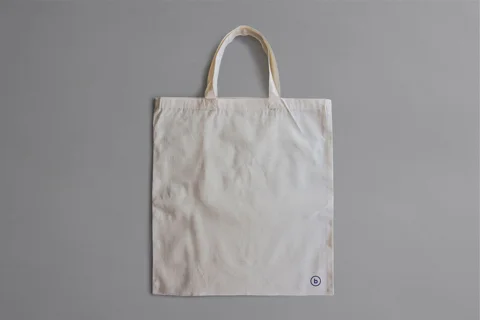
A canvas bag may also contain coatings, leather, stiffeners and glued layers. Clean the complete object, not just the fabric name.
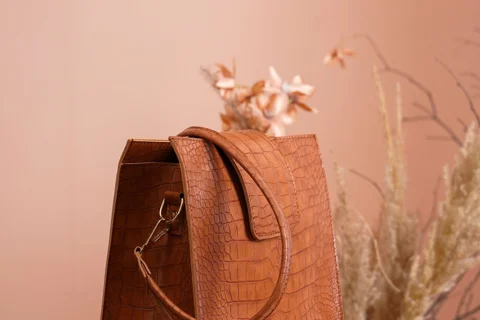
Identify the finish and follow the bag maker's advice before choosing a cleaner or conditioner.
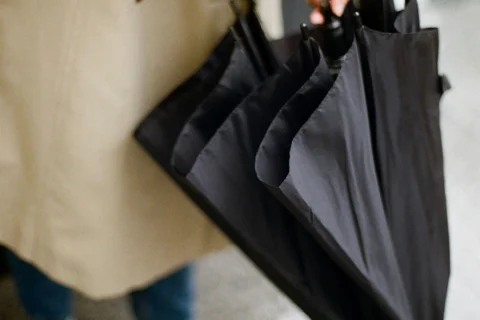
Compare the open coverage and the closed length. Both have to suit the journey.
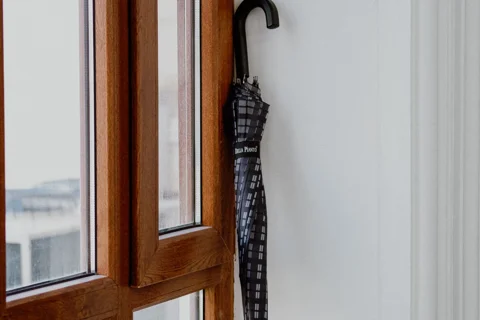
A wet umbrella needs a temporary landing place and a chance to dry before it goes back into its sleeve.
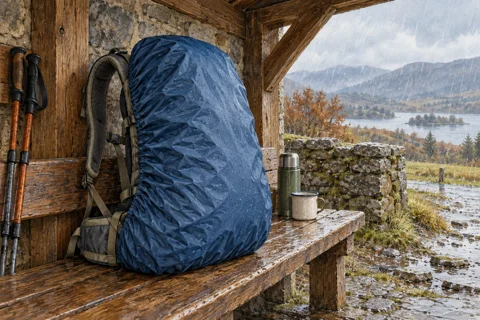
Check coverage over a loaded bag and protect vulnerable contents separately when the conditions require it.
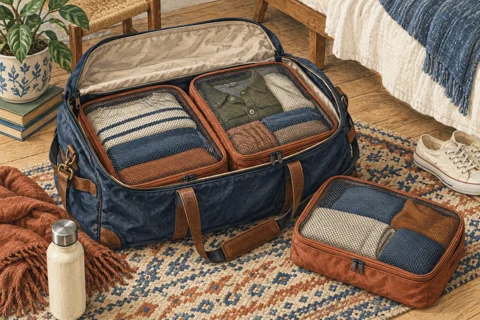
Choose a few shapes around the bag you use and the way you unpack during a trip.
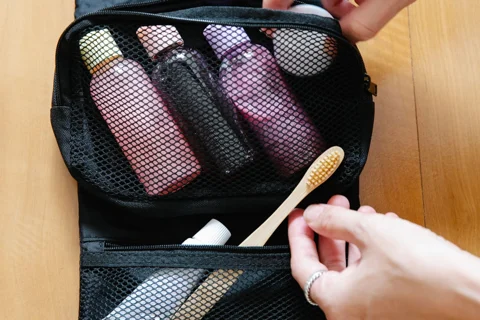
Look for a pouch you can open, clean and dry, with enough room to keep lids from being squeezed.