Clear boxes or opaque ones for household storage?
Visibility and visual quiet solve different problems; choose according to what gets forgotten.
Think about the contents first
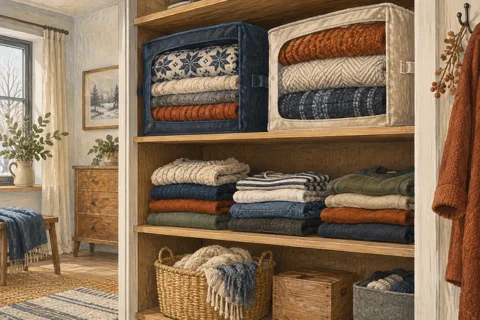
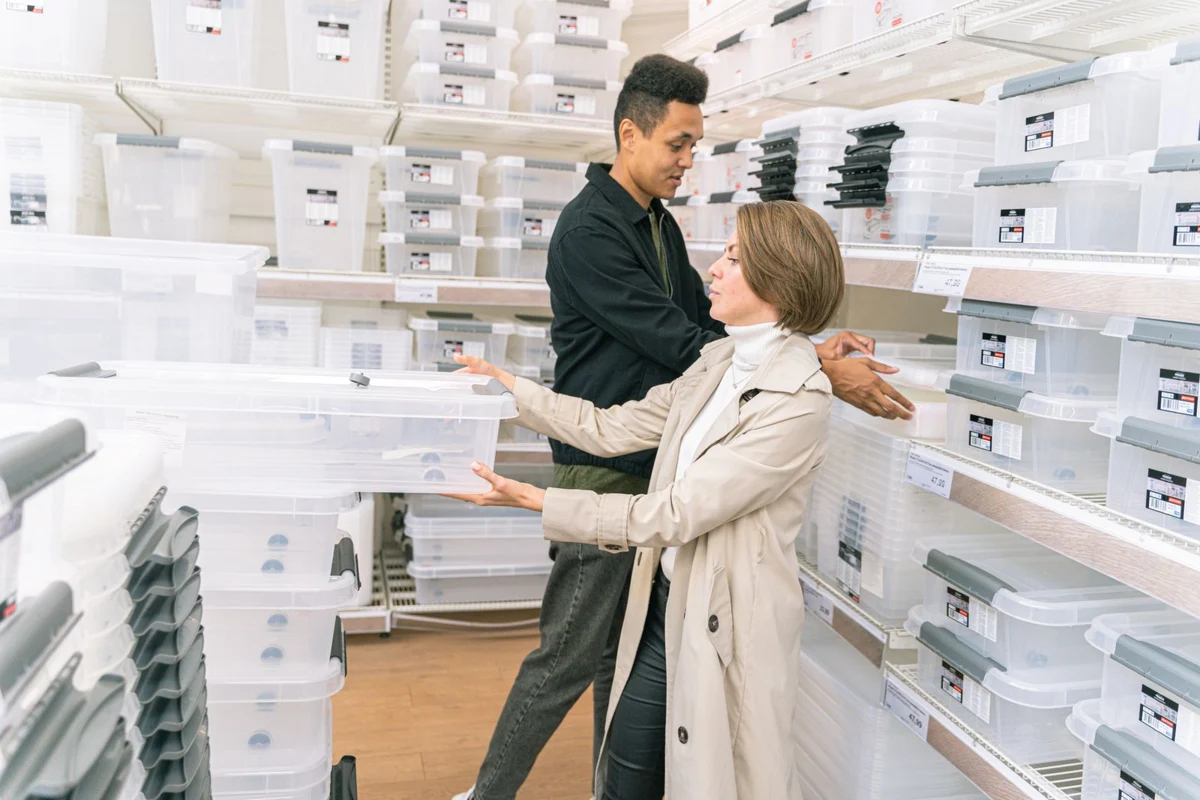
Clear boxes let you see shapes and colours through the sides. That can help with a varied collection of small household items, especially when the label would otherwise read miscellaneous. Opaque boxes conceal the contents and can make an open shelf look less busy, but they need another way to identify what is inside.
Neither choice is inherently more organised. A transparent box packed in several layers can be as difficult to search as an opaque one. The depth and the grouping of contents matter more than visibility alone.
Match the view to the shelf
On a low shelf, the lid may be the first surface you see. On a high shelf, only the front edge is visible. Place a label accordingly, even on clear boxes if the contents are not obvious. Light-coloured objects behind a translucent wall can be hard to distinguish from one another.
Consider whether the stored items need protection from light and follow their care guidance. Do not choose transparent display storage for a delicate object solely because it looks attractive. For ordinary household supplies, the main question may simply be whether seeing the remaining quantity prevents unnecessary repeat purchases.
Handles, lids and corners determine usability. A clear box with no comfortable grip can be awkward when full, while an opaque one with a broad handle may be easy to retrieve. Compare internal dimensions and the opening rather than choosing on appearance alone.
Read material and load information for stacking. A lid that clips on does not automatically make a box suitable for a tall stack. Keep heavy contents where they can be handled safely and follow the shelf's limits as well as the container's.
Use a mixed approach if it helps
An open room shelf may benefit from opaque baskets for daily clutter, while a cupboard can use clear boxes for occasional supplies. There is no need to buy one matching system for every location.
Try one box with the real contents and leave it in place for a week. If you keep opening it because the contents remain unclear, improve the grouping or label. If the visible collection feels distracting, move that group behind an opaque front. The useful choice follows the storage problem, not a rule about which type looks tidier.