Fridge bins that leave room for air and access
A bin should make a group easier to reach without blocking the refrigerator or hiding food.
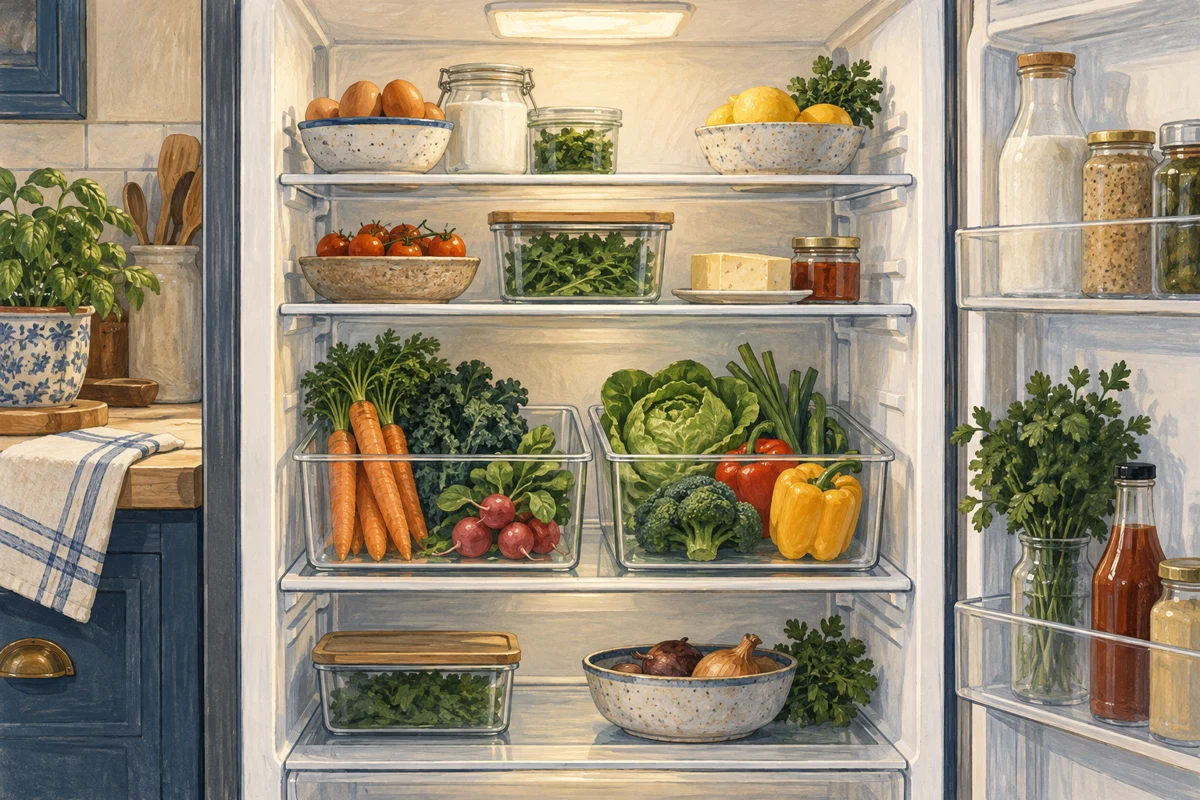
Start with the awkward group
A refrigerator bin is useful when several small items are difficult to retrieve together. It can hold a defined group and slide forward for access. It is less useful when it becomes a deep miscellaneous box that hides older food beneath newer purchases.
Choose the group before the bin: small jars used together, suitable packaged snacks or another set that shares storage requirements. Follow food packaging and refrigerator instructions. A clear plastic organiser does not change where an item should be stored or how long it remains suitable.
Measure the shelf and the door
Include the handle, the bin's widest edge and the space needed to pull it out. A bin can fit on the shelf while preventing the refrigerator door from closing properly. Check nearby door shelves and the path of any drawer below.
Do not block vents or crowd areas the appliance maker requires to remain clear. Extra containers reduce usable space as well as organising it. Follow the refrigerator's loading guidance, and do not assume a wall-to-wall arrangement is efficient simply because it looks orderly.
Keep the contents visible
A low front can help you identify what is running out. A very tall bin may hide labels or make small packets difficult to reach. Place older suitable items where they will be noticed and maintain their dates rather than using the bin as a reason to discard packaging information.
Avoid grouping foods in ways that create contamination risks. Keep raw foods handled and contained appropriately, separate from ready-to-eat items under reliable food-safety guidance. An open organiser is not a leakproof food container unless the manufacturer explicitly designs it for that purpose.
Give different users a clear arrangement
If several people use the refrigerator, agree on the grouping before buying organisers. A bin labelled lunch items is only helpful if everyone knows which items belong there and which should stay in their original storage position. Avoid a system that depends on one person continually restoring a perfect arrangement after everyone else cooks.
Leave a flexible space for an unusually shaped covered dish or a larger grocery purchase. Filling every centimetre with fixed bins can make ordinary variation difficult. The refrigerator should still close properly and operate with the clearances its manufacturer requires when the week's food changes.
Try removing the loaded bin while holding nothing else. If it is heavy, catches on the shelf or requires a two-handed lift from an awkward height, reduce the group or choose a smaller container. A handle is useful only when the complete movement is manageable. It should simplify finding food, not turn several small items into one inconvenient load.
Make cleaning straightforward
Choose a material intended for the refrigerator environment and follow its washing instructions. Not every clear plastic bin is dishwasher-safe. Remove the contents appropriately before cleaning, dry the bin and check the shelf beneath for spills.
Try one bin first. Use it through several shopping cycles and notice whether the handle helps or whether you keep lifting items around it. A simple grouping may solve the problem without needing every refrigerator shelf to match. Leave room for an unusually shaped dish or a larger purchase; a rigid layout can make ordinary variation harder to accommodate.