Mark out a rug before choosing its size
Mark the footprint and move the furniture before deciding whether a rug is large enough.
Use the room at full size
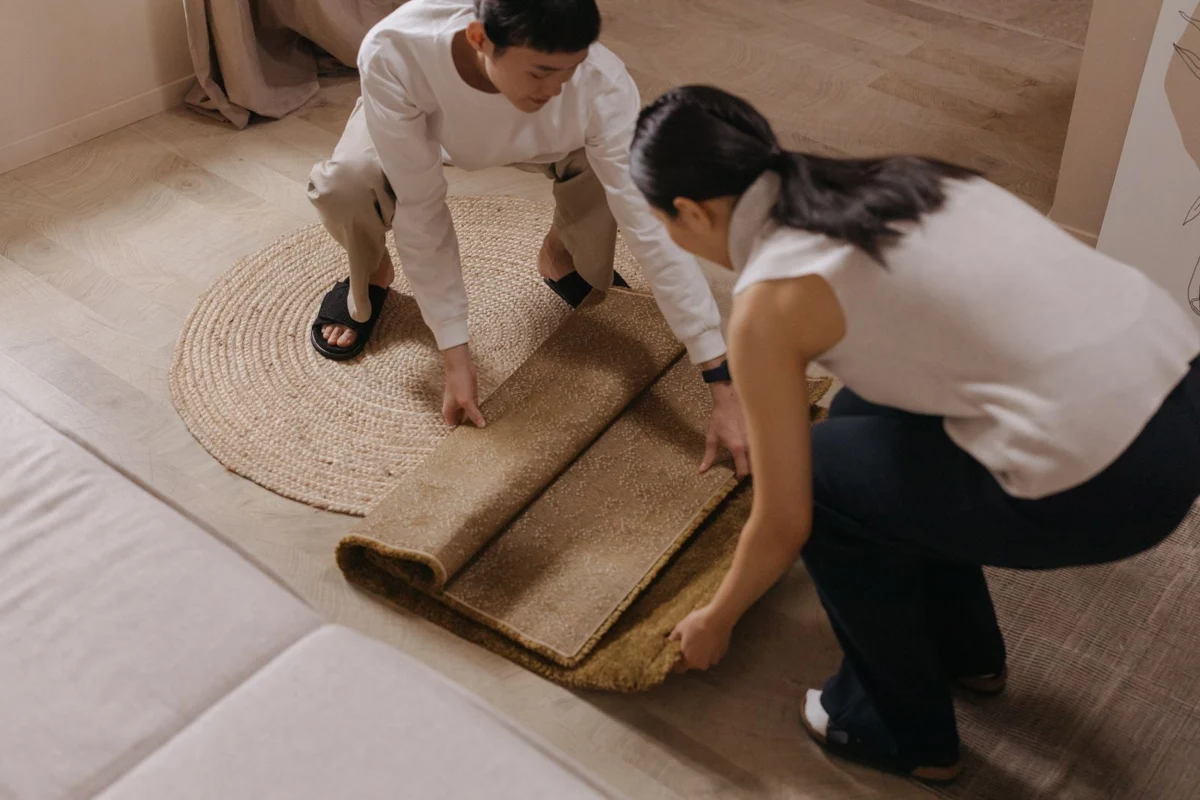
A rug viewed as a small rectangle on a screen gives little sense of how it will divide a room. Mark the proposed edges on the floor with a suitable removable method that will not damage the surface. Then walk through the room and open nearby doors. This is a footprint check, not just a colour decision.
Include the thickness of the rug and any compatible underlay when checking door clearance. A low door may sweep a rug edge even when the empty floor plan looks fine. If the rug sits near a frequently used route, avoid leaving an edge where people regularly turn or step down from a different surface.
Write the measurements in one unit. A listing in feet and a room measured in centimetres can produce a surprisingly large mistake if converted casually. Check the finished size, not the dimensions of the rolled delivery package.
Around a sofa
Decide whether the rug will sit beneath all the seating, beneath the front legs or entirely in front. There is no single arrangement for every room. What matters is that the furniture feels stable and the rug relates to the seating rather than appearing accidentally stranded in the centre.
Try the marked outline with the coffee table in its usual position. Sit in each chair and put your feet where they naturally rest. If the intended rug ends just beneath the front edge of a chair, consider whether that edge will curl or shift with repeated movement. Check the furniture and floor-protection guidance for any underlay you plan to use.
In a compact room, a smaller rug may leave more visible floor, but it should still have a clear purpose. Do not buy a larger size simply because a staged room uses one. The walkway around your own furniture is the space that has to work.
Beneath a dining table
Pull every chair out as someone would when sitting down or leaving. The rug needs to accommodate that movement if the intention is to keep the chair legs on it. IKEA's rug guidance highlights this point; the tabletop footprint alone is not enough.
Check the end seats separately. They may need more room than the side chairs, particularly with an extended table. A thick pile can also change how easily chairs slide. Consider crumbs and spills when choosing construction, and read the cleaning instructions before placing a hard-to-clean rug beneath everyday meals.
If the necessary size blocks a door or passage, a dining rug may not suit that layout. Leaving the floor uncovered is a reasonable outcome of measuring, not a failed decorating plan.
At the bedside
Open under-bed drawers and any nearby wardrobe doors. The rug should not obstruct their movement or create a thick ridge where wheels need to travel. Two smaller bedside rugs may be easier to place than one large rug under the bed, although they introduce more separate edges to manage.
Think about cleaning access. A large rug beneath heavy furniture can be difficult to lift or turn, while a small one may move more readily and need an appropriate underlay. Choose the construction and placement together rather than treating the underlay as an afterthought.
Once the marked footprint works, compare colours and textures. Keep the measurements with a room photograph so you do not have to recreate them in a shop. The useful result is a rug that leaves doors, chairs and drawers working normally after the photograph has been taken.