The small details of a saucepan lid
Fit, grip and somewhere to put the wet lid all deserve a place in the comparison.
A diameter is not a fit test
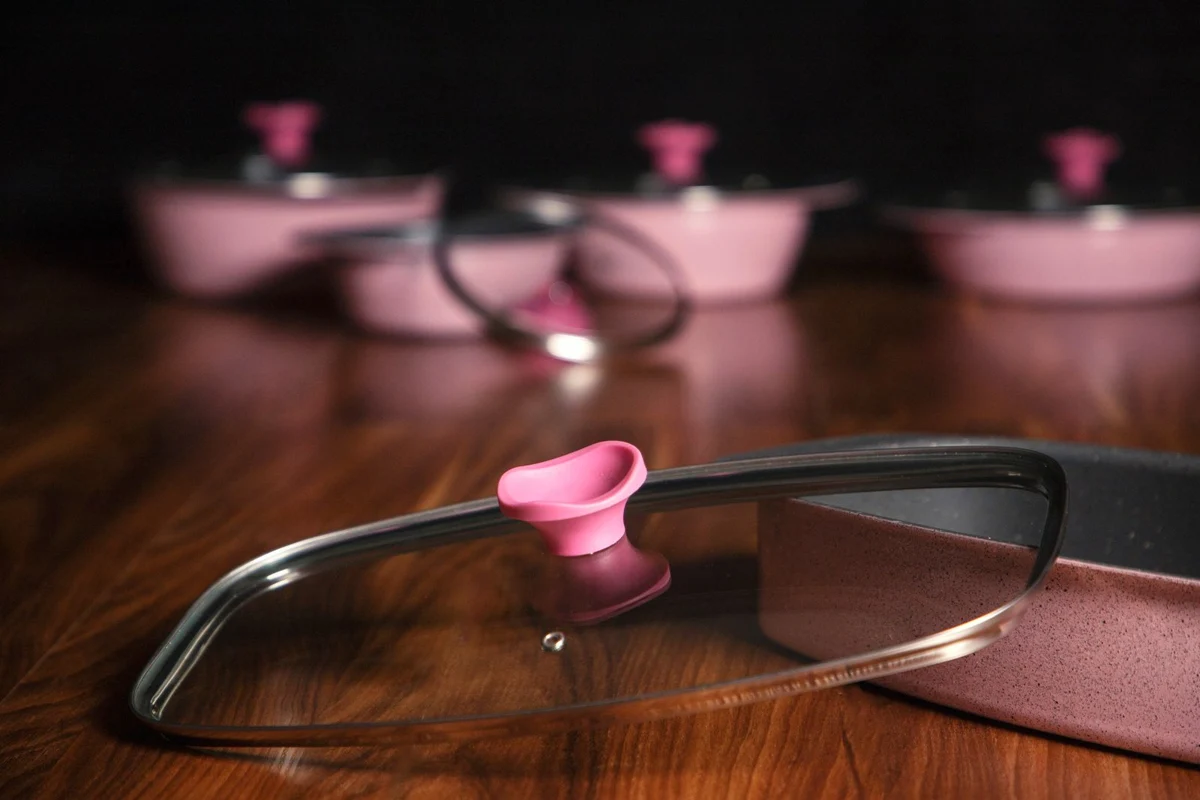
Two lids described with the same measurement may sit differently on a saucepan. One rests on a ledge inside the rim; another overlaps it. If you are replacing a lid, find the saucepan's model details and ask for a compatible part rather than assuming that a matching number guarantees a stable fit.
Where possible, try the lid on the cool pan. It should sit as intended without rocking or catching on a pouring lip. Do not force an almost-fitting lid into place. An ordinary saucepan lid is not a pressure-cooker component, and it should never be adapted for that purpose.
Think about the hand above it
A large knob can be easy to grasp but take more room on a shelf. A low loop may store neatly yet be difficult to hold with heat protection. Imagine lifting it while keeping clear of escaping steam. The material and shape do not guarantee a cool handle; use the protection and technique the manufacturer recommends.
A glass lid lets you see some of what is happening without lifting it, although condensation can obscure the view. A metal lid can be lighter or less vulnerable to impact, depending on the construction. Compare the actual weights and cleaning instructions instead of treating either material as universally better.
Read heat permissions for the lid separately from the saucepan. A body that is oven-safe may be supplied with a lid or knob carrying a lower limit. Keep those details together so the most restrictive component is not forgotten when moving between cooking methods.
Give the lid a landing place
During stirring, a wet lid needs somewhere stable to rest. Check whether your usual spoon rest is large enough, whether a heat-resistant surface is available and whether drips will land somewhere easy to clean. Balancing a round lid against a nearby bottle saves space only until it slips.
For storage, upright slots can work if they accommodate the handle and keep the lids from rolling. A cupboard-door rack needs sufficient clearance when the door closes. Measure with the saucepan inside the cupboard; a lid rack that collides with a handle is not a gain.
If buying a new pan, confirm that the photographed lid is included. Some ranges sell bodies and lids separately. The complete cost and the space occupied by both are the useful figures, not the saucepan price alone.