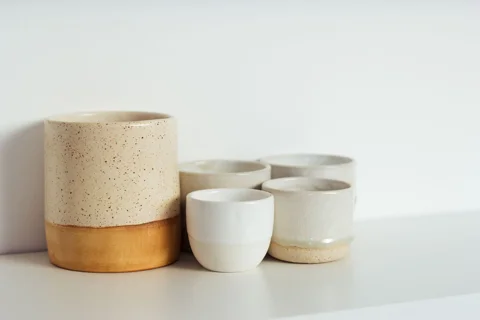
Serving bowls that work together without matching
Choose bowls for the portions and serving spoons on your table, not only for a matching set.
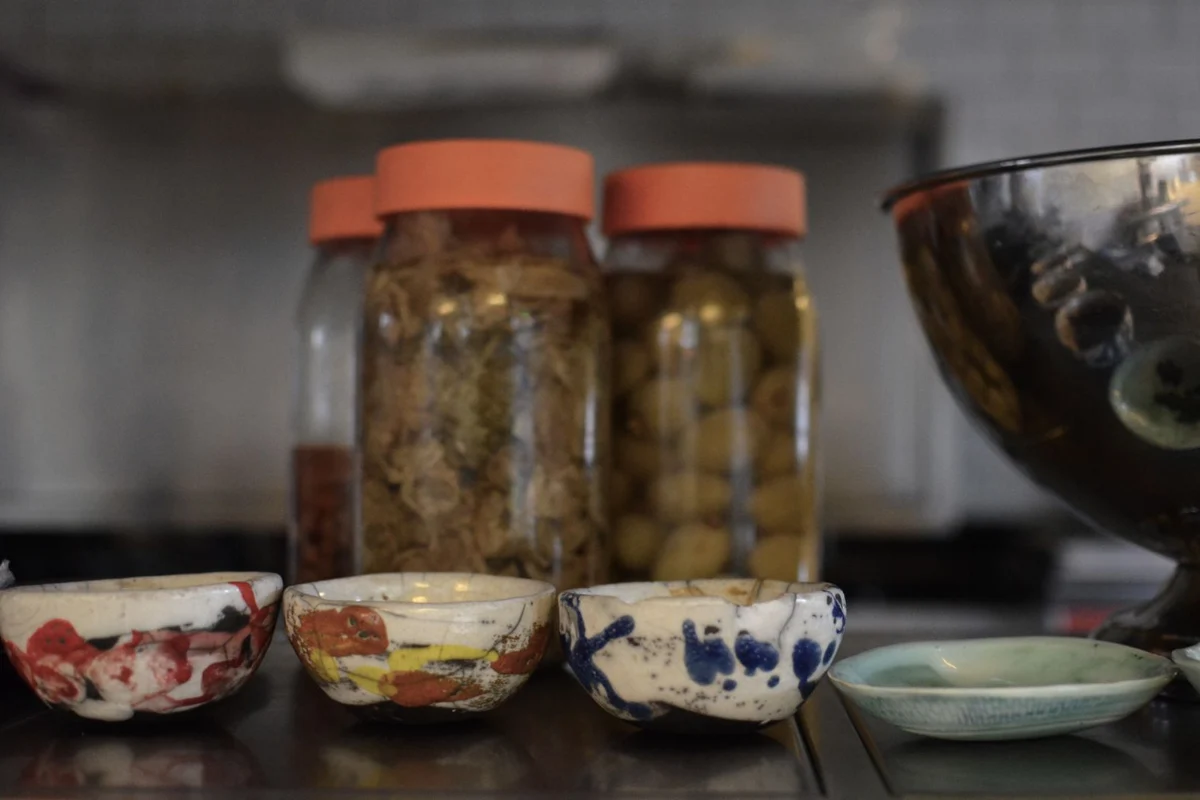
A deep bowl can hold plenty while making the last spoonful difficult to reach. A wide shallow bowl presents food differently but occupies more table space. Start with the dishes you serve most often: dal, rice, dry vegetables and salad do not all benefit from the same shape.
If your table is small, several modest bowls may fit around plates more comfortably than one large centrepiece. Leave space for hands and serving spoons, not just the bowls themselves. A crowded arrangement becomes more awkward once people begin passing food.
Capacity in use
Published capacity usually describes the container rather than a sensible serving level. Food filled to the rim is difficult to carry and stir. Compare bowls at the level you would actually use, allowing room for the spoon and for movement on the way to the table.
A narrow base with a broad top can be less forgiving when bumped than a lower, wider form. Check how the bowl sits on a flat surface and whether its weight makes passing it uncomfortable. Handles can help, but they also increase the storage footprint and may become hot depending on use.
Serving ware is not necessarily cookware. Do not assume a bowl can go into an oven, microwave or freezer because it is ceramic or glass. Use the manufacturer's instructions for that exact item, including any limits on sudden temperature changes.
Matching is optional
A collection of bowls can work together through similar scale without being identical. This lets you choose one smaller piece for chutney and a broader one for vegetables instead of accepting sizes you rarely use. If buying a set, check the capacity of every piece.
Nesting saves cupboard space only when the bowls do not jam together or damage their finishes. Follow any advice about separators, and avoid a stack so tall that retrieving the bottom bowl becomes a balancing exercise.
Before adding another bowl, set out the pieces already in the cupboard for a typical meal. The gap may be a serving spoon or a smaller dish, rather than another large bowl. Shopping for that specific gap tends to produce a more useful table than replacing everything to make it match.