Spice jars you can identify without opening
A label in the right place can be more useful than a perfectly matching row of glass.
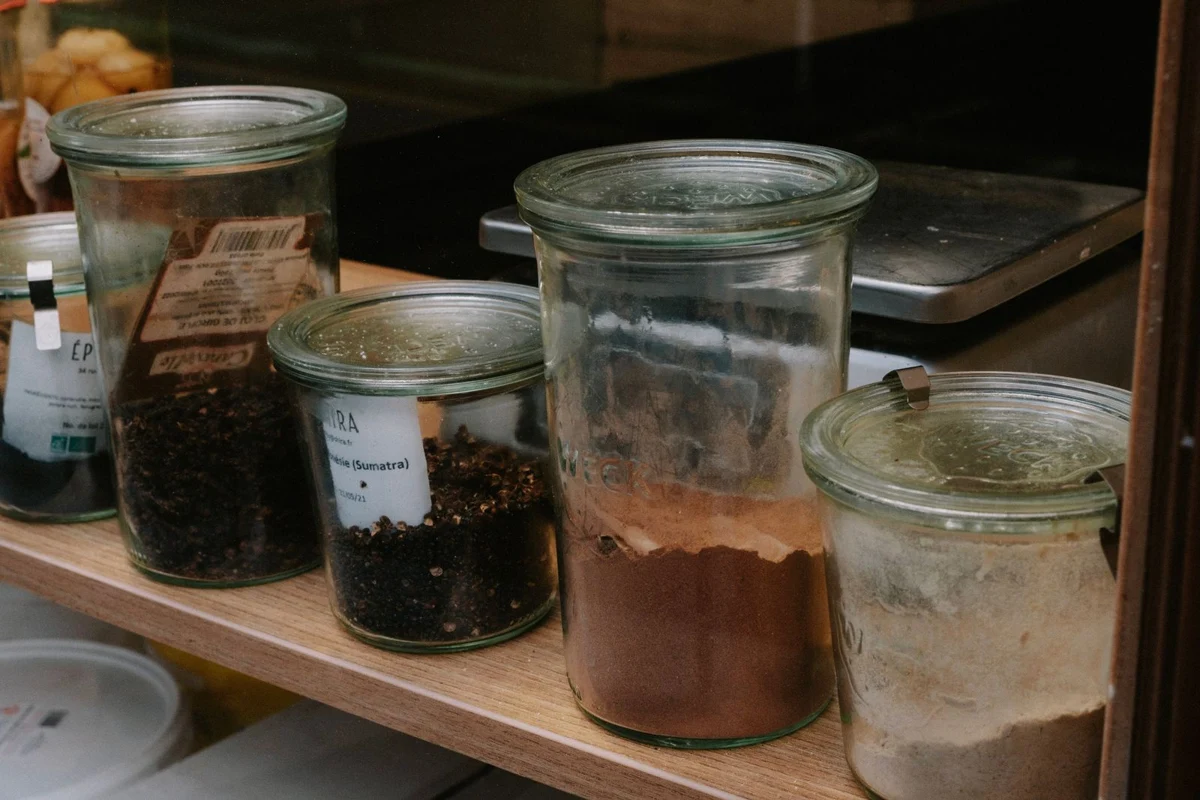
Look from the angle you cook
Spices stored in a drawer are seen from above. Those on a shelf are read from the front. Put identification where your eyes actually land, rather than copying a photograph of jars arranged on a counter. A lid label is little help when only the sides are visible.
Before buying jars, set out the spices you use regularly. Separate small amounts from those bought in larger packets. One uniform size may leave some jars nearly empty while forcing the rest into separate refill bags. A small family of compatible sizes can be easier to live with than a large identical set.
Leave room for a spoon
Check the mouth against the measuring spoon you use. A narrow opening may pour neatly but make it difficult to take a small amount without spilling. A wide jar is easier to reach into, though its footprint may reduce the number that fit across a shelf.
Keep dry utensils for dry spices and choose closures you can clean and dry properly. A decorative cork, a screw cap and a clip lid have different care needs. Read what the maker claims about the closure rather than assuming any snug lid is airtight. Do not put damp jars straight into service after washing.
Place the working collection where it can be reached without leaning over heat or steam. A shelf immediately above the hob may look convenient but exposes the jars to a busy cooking zone. The best position is one you can use safely with the lid off and a spoon in hand.
Keep the original information
When decanting, retain the ingredient name, relevant dates and any storage instructions from the packet. Similar-looking powders are easy to confuse once packaging disappears. A small note underneath the jar or a labelled refill bag can preserve information that a decorative front label omits.
Avoid continually topping up a nearly empty jar without reviewing its contents. Use a routine that lets you clean and dry the vessel when appropriate and keep track of older stock. A new label should not hide an old date.
Try the system with a few jars first. Cook several ordinary meals and notice which ones are awkward to retrieve. If the lids collide in the drawer or the labels are unreadable from your normal position, fix the arrangement before buying enough containers to repeat the problem across the whole collection.