A steel lunchbox that fits your lunch
Capacity is only the start. Think about the shape of the meal, the journey and the washing-up afterwards.
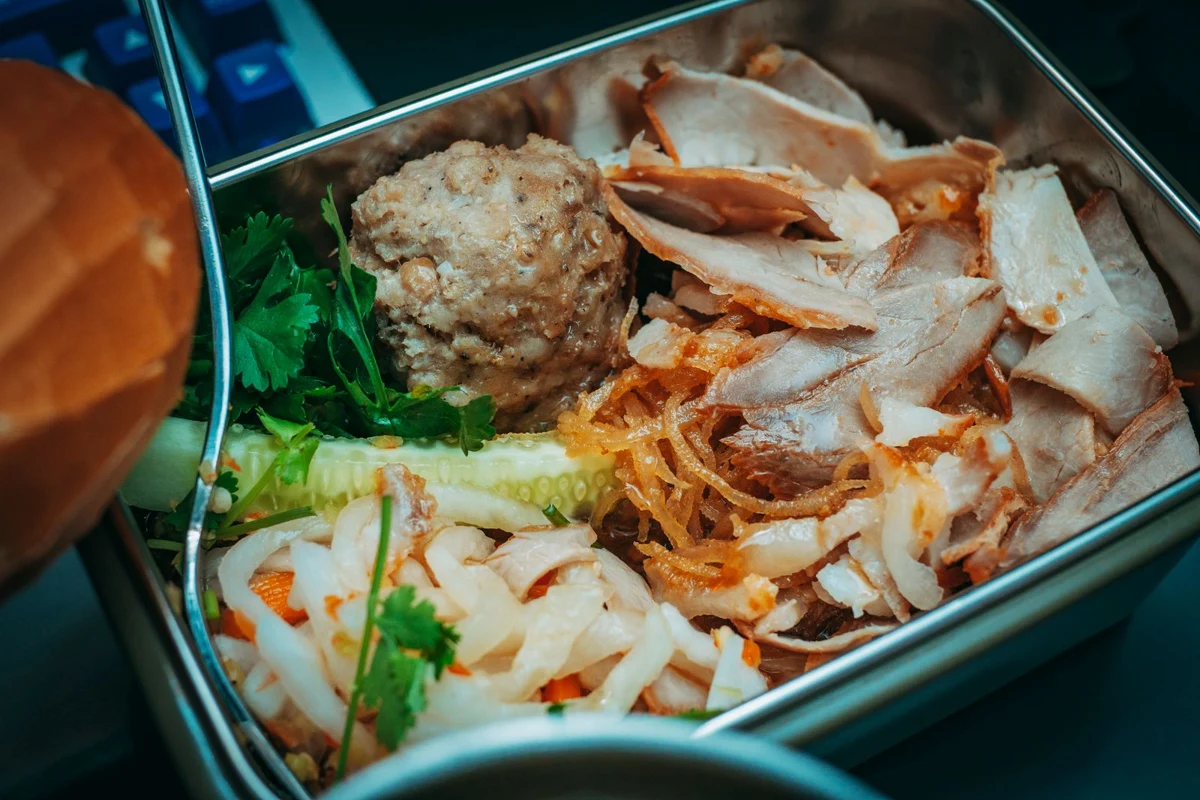
A lunchbox can hold the right number of millilitres and still be wrong for lunch. Two shallow containers may work well for roti and a dry vegetable dish, while the same total volume divided into several small pots may leave everything awkwardly packed. Start with a meal you carry regularly, not the neat arrangement in a product photograph.
Set out your usual containers on the counter. Notice which one is consistently half empty, which lid has to be forced down and which item travels separately. That small audit gives you a more useful specification than choosing the largest set that fits the budget.
Measure the outside as well
The quoted capacity normally describes the space for food, not the room the complete set takes in your bag. Outer insulation, handles, clips and a carrying case all add bulk. Compare the assembled dimensions with the usable space beside your bottle, notebook or laptop. If the bag narrows towards the top, measure the opening too.
Weight deserves the same treatment. An empty steel set may feel reassuringly solid in a shop, but food and water change the load. Imagine the full journey: a walk to the station, a crowded bus, stairs at the office. A container that stays at a desk has different requirements from one carried for an hour each way.
Find out which part is sealed
A snug metal lid is not automatically a leak-proof lid. Some sets rely on a separate gasket, some have individual locking containers, and others are intended mainly for food that will not flow. Read the specification for the exact model and each compartment. A sealed outer carrier does not necessarily prevent food moving between inner sections.
If you carry dal or a sauce, ask whether the relevant container is designed for that use and whether it must remain upright. Do not transfer a leak-proof claim from another model in the same range. Once the product arrives, follow the maker's directions for checking the closure before trusting it beside things that cannot get wet.
Reheating is another separate question. Ordinary metal containers should not be put in a microwave. Check what facilities are available where you eat and how you will transfer the food if needed. Insulation claims also depend on the product and conditions; the word 'steel' alone does not establish temperature retention or food safety.
The lid comes home too
Look at the corners and any removable seals. Can you reach the places where food collects? Does the manufacturer explain how to remove and replace a gasket? A complex closure is only useful if it can be kept clean and assembled correctly. Do not prise out a part that is not intended to be removed.
Check washing instructions for all components. A steel bowl, plastic lid, insulated carrier and fabric bag may need different treatment. Make enough drying space to leave them open before packing them away; putting a damp set back into its carry bag is an easy habit when the next morning is busy.
Finally, look for replacement lids or seals and record the model name. A lunchbox with a damaged closure may need only one correct part, but a similar-looking replacement is not proof of a proper fit. The most useful set is the one that can be carried, opened, cleaned and used again without a daily workaround.