Flat or concave: choosing a tawa for your hob
The cooking surface and the underside both need to suit the job.
Look sideways
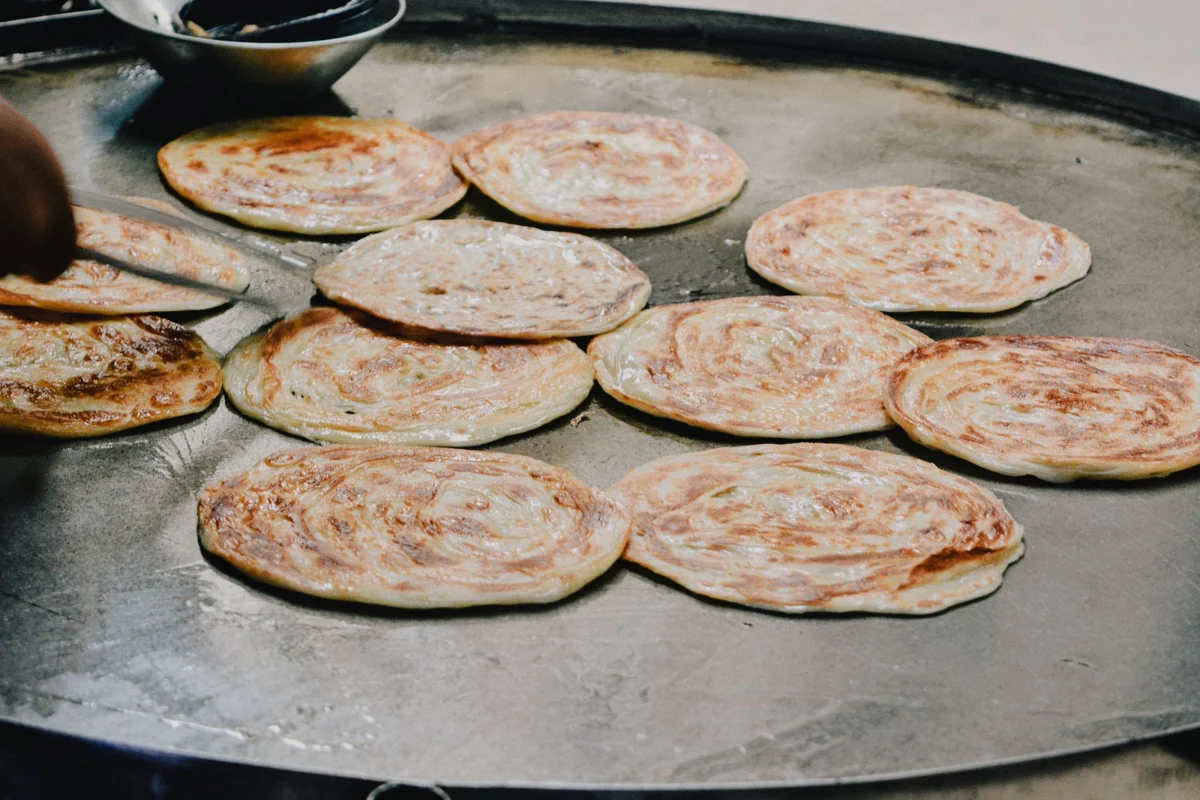
A tawa photographed from directly above can hide its most important shape. Ask for a side view. A flat cooking surface, a shallow curve and a distinctly concave body behave differently on the support beneath them and give you different working room for a spatula.
Start with the hob. A vessel that sits securely on one gas support may be unsuitable for an induction or flat electric surface. Check both the cookware's stated compatibility and the hob's requirements. For induction, a flat-looking shape alone is insufficient; the base also needs the appropriate magnetic construction and size.
Match the surface to the food
Think about what you make most often rather than buying for every possible bread or batter dish. A low edge can help a spatula slide under a dosa. A different shape may feel more familiar for moving a roti. Neither preference establishes a universal best tawa, and a product name does not replace a clear photograph of its profile.
Compare the usable area with your usual portion. A wide rim or curved edge can reduce the flat space. If a current tawa is nearly right, measure it and describe the actual annoyance: a handle that obstructs another burner, a surface too small for spreading batter, or a weight that makes washing difficult.
Material changes the routine. Seasoned iron, hard-anodised cookware and coated non-stick models should not all be cleaned or heated in the same way. Read the maker's instructions and choose a finish whose care you can maintain. Do not use a non-stick product as though it were an uncoated iron plate.
Leave room for the handle
Check the overall length and the direction the handle will face during use. It should not force you to reach across another hot vessel or project into a busy walkway. A removable handle is only useful if the product is designed for it; improvised modifications are not a solution to a cramped hob.
Also measure the sink and storage space. A large circular pan can be difficult to rinse under a low tap or store upright in a narrow cupboard. A hook needs a suitable load rating and secure mounting, especially for heavy iron.
Before buying, collect three details: the underside, the side profile and the complete dimensions. Those tell you considerably more about fit than a photograph of a perfectly cooked dish placed on the surface.