Match a reusable bottle to the way you carry it
The best capacity on paper can be the wrong shape for a side pocket or a daily walk.
Try the bottle against the bag
Measure the narrowest part of the pocket or compartment where a bottle will travel. Include the mouth of the pocket, not just the space below it. A bottle that fits once inside can still be difficult to insert when the bag is full. Check height too: a tall neck may push against a zip or sit above the retaining strap.
Capacity is only one part of carrying weight. Compare empty weights and imagine the filled bottle beside everything else you take. A large vessel may reduce refills but make a short walk less comfortable. If reliable drinking-water refills are available along your routine, a smaller size may be easier to manage.
Choose the opening you will use
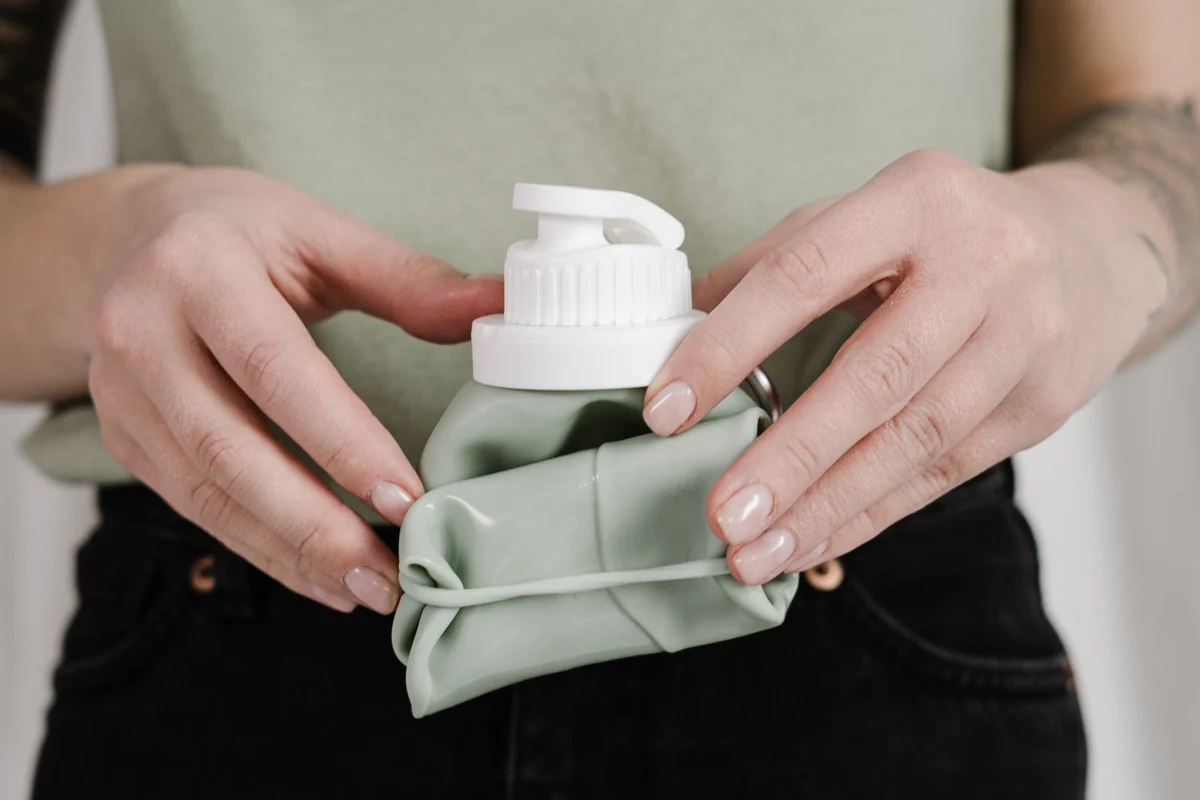
A wide mouth is convenient for cleaning and some filling methods. A narrow drinking opening may be easier to control while seated on a moving journey. Straw, flip-top and screw-cap designs add different parts to the cleaning routine. Look at the actual closure rather than treating all bottles of one material as alike.
Ask whether the model is intended to be carried on its side and what the maker says about leakage. An upright desk bottle and a bag bottle have different needs. Check the condition and fit of seals as directed, and do not put an unverified closure beside a laptop simply because the cap feels tight.
Consider the end of the day
Can your brush reach the base and shoulders? Are the lid components removable, and are instructions provided for reassembly? A complicated cap is not a problem if you are happy to clean it; it becomes a problem when parts are repeatedly skipped because they are awkward.
Read dishwasher, heat and drink restrictions for the exact product. An insulated bottle may have a different cleaning method from an uninsulated one. Do not assume suitability for hot or carbonated drinks from the word reusable, or use a bottle for something its maker excludes.
Allow the parts to dry as instructed before closing and storing. A bottle that disappears into the commuting bag immediately after rinsing may need a different evening routine. Keeping a clean spare can be useful, but buying several identical bottles will not solve a cap that nobody likes washing.
Before choosing a colour, write down the pocket width, desired capacity and closure type. These three details narrow the search to bottles that fit the journey rather than merely the product photograph.