Does a bag organiser make your bag easier to use?
An insert should make objects easier to reach without using up the space they need.
Count the things that get lost
Empty the bag and identify the actual problem. Perhaps keys fall to the bottom, a pen marks the lining or a small bottle tips over. If the only issue is one loose object, a small pouch or attached key loop may be enough. A full organiser is useful only when its structure solves more than it adds.
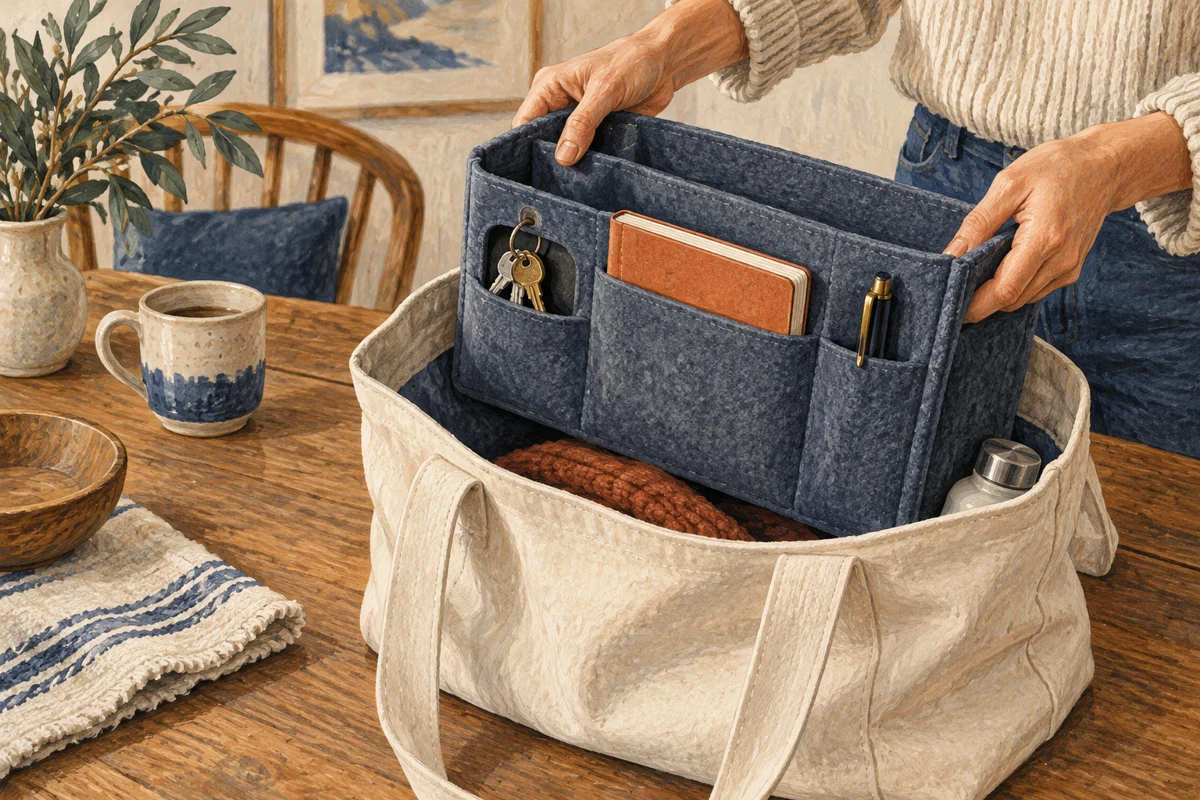
Measure the base and opening of the bag, then compare the insert's outside dimensions. A tapered tote may have a wide mouth and a much smaller floor. The organiser must pass through the opening and sit without forcing the sides apart.
Check height too. An insert that rises above the bag's closure can stop a zip working or expose items you expected to keep covered. Handles on the insert should fold away rather than crowding the main opening.
Leave some space unassigned
Rigid divisions keep objects upright but reduce flexibility. A lunchbox, cardigan or unexpected purchase may need one larger space rather than six narrow pockets. Arrange your normal load on a table and decide which items genuinely benefit from separation.
An organiser also adds its own weight. Check the empty weight if supplied and consider the combined load when carried. A heavy structured insert can change the feel of a lightweight tote more than its photograph suggests.
Choose pockets you can see and use. Very deep narrow slots may swallow short objects, while loose outer pockets can catch on the bag lining as you lift the insert. Test access with the bag open in its normal position, not only with the organiser sitting neatly on a desk.
If you change bags often
An insert can make switching easier, but only if it fits the bags involved. Compare the smaller bag first. A compromise insert may leave spare room in the large tote, which is often preferable to squeezing it into the small one.
Keep damp or leaking items out of a fabric organiser unless the product is specifically designed for them. Follow its cleaning instructions and dry it before returning it to a closed bag. Occasionally empty every pocket so receipts and unused objects do not become permanent passengers. The measure of success is whether you find things more easily, not whether every compartment has been filled.
Test it outside the bag first
Load the insert on a table, then lift it using the intended handles. See whether the pockets remain upright or collapse into the central space. A very soft insert may be fine inside a structured tote but less useful inside another soft bag. Conversely, a rigid insert can make a slouchy bag feel much more box-like.
Check whether the loaded insert can pass through the bag opening without scraping or catching. Removing a bottle every time you switch bags may be acceptable, but it changes the claimed convenience. Try the whole transfer once before assigning every object a permanent pocket. Leave the arrangement easy to revise after a few ordinary days.