A rain cover is only one layer of protection
Check coverage over a loaded bag and protect vulnerable contents separately when the conditions require it.
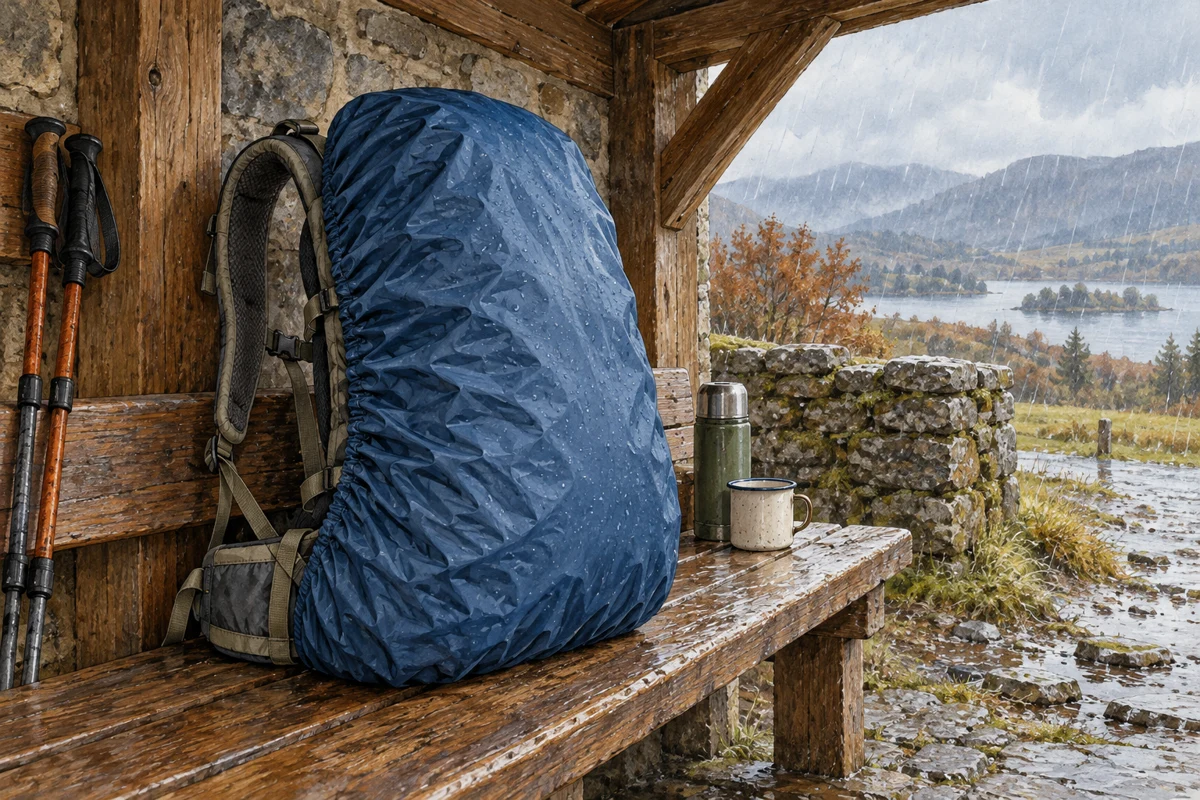
Fit the shape you carry
A rain cover sized only against the empty bag can be misleading. Bottles in outer pockets, a rolled jacket or a fully packed main compartment change the shape. Check the cover's stated size range and try it over the load you actually carry.
Follow its fastening instructions so the cover sits as intended. It should not be stretched to the point that edges lift away, nor so loose that it hangs where it can catch. A cover made for a particular pack may have attachment points that a generic cover lacks.
Look at the part of the bag left against your back. Many covers do not enclose every surface, strap opening or seam. A covered bag should not be treated as a dry bag suitable for immersion. Read the product's actual limits rather than assuming the word rain means all water conditions.
Keep important contents protected
Documents, electronics and other vulnerable objects may need their own suitable inner protection. Choose that protection for the item and expected conditions, and close it correctly. A cover on the outside and an open pouch inside do not provide the same arrangement as a properly closed protective container.
Check access during the journey. If reaching a bottle requires peeling back the cover, water may reach areas that were previously protected. Organise frequently needed items before leaving so you do not repeatedly expose the main compartment in heavy rain.
Keep loose cords and cover edges managed as the product directs. Do not let them hang near moving parts if you are carrying the bag around machinery or a cycle. Visibility and safe use of the bag still matter when it is covered.
Consider two different journeys. On a brief walk between sheltered stops, a correctly fitted cover may mainly protect the exposed face of the bag from rain. On a longer trip with repeated opening, wind-driven water or a bag set on wet ground, the vulnerable points are different. Plan the contents protection around those conditions rather than assuming the same arrangement serves every journey. A cover does not make a wet ground surface a suitable place to rest the bag, and it does not remove the need to inspect the contents after a particularly wet trip.
Dry it before packing it away
Remove the cover when you reach a suitable dry space and check the bag underneath. Dry both according to their instructions. Osprey's rain-cover guidance specifically calls for drying the cover fully before storage.
If the cover has its own pouch, dry that too. Inspect elastic, seams and attachment points before the next trip. A small tear or stretched edge may change the fit even when the rest still looks sound. Repack the cover where it is easy to reach, rather than beneath the contents it is supposed to protect when rain begins.
Rehearse the change before the rain
Take the cover out and fit it once in dry conditions. Notice which edge belongs at the top and where any retaining loop connects. Repack it so that orientation is easy to recognise. If it takes several attempts on a clear day, it will be more awkward when the bag and your hands are already wet. Keep the instructions or a simple photograph available until the process is familiar.
Now remove something you often need, such as a transport card or water bottle, while the cover is fitted. If access requires exposing the whole opening, move that item to a suitable place before the journey begins. Do not cut a new hole in the cover to make a pocket accessible. That changes the coverage and may weaken a seam or coating.
A cover stored in an outer compartment should be reachable without emptying the main bag. If the compartment is too tight once the pack is full, try a different permitted storage position. Keep it secured so it cannot fall out unnoticed. A cover that remains inaccessible beneath a laptop and lunchbox is unlikely to be fitted promptly when the weather changes.