Blackout fabric and the gaps around it
A fabric can block light while the window still glows around the edges. Plan the whole opening.
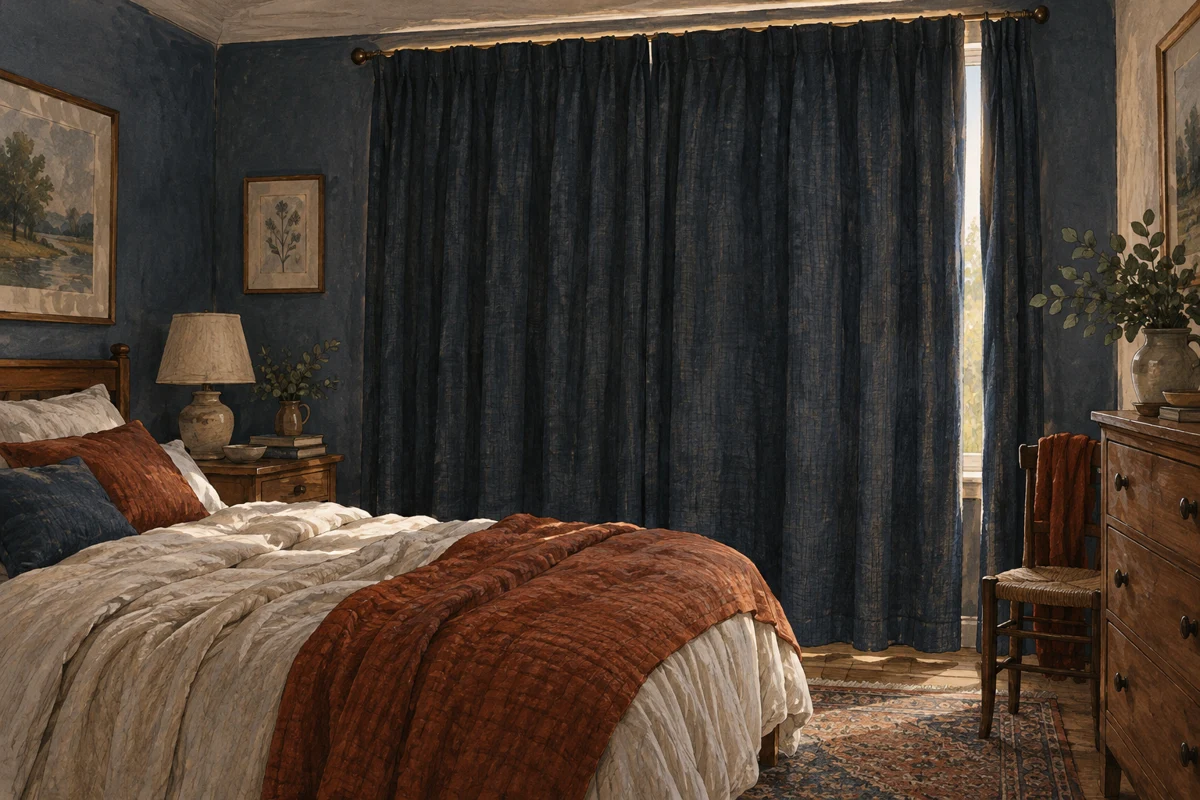
Separate the cloth from the installation
Blackout describes the fabric's light-blocking function, but the assembled window has edges, joins and hardware. Light may enter above the heading, beneath the hem or between two panels. Before replacing a curtain, look at where the unwanted light actually appears.
Close the curtains at the time the problem occurs. Morning sun from one side can reveal a gap that is unimportant later in the day. Note whether the light passes through the cloth itself or around it. That observation distinguishes a material issue from a coverage issue and may save an unnecessary purchase.
Check the product description carefully. Room-darkening and blackout are not always used identically by retailers. Look for a clear explanation of the particular fabric's performance rather than relying on a dark colour in the photograph. A dark decorative curtain is not automatically a blackout curtain.
Allow for overlap and movement
Measure the rail or pole span as well as the window. There needs to be enough fabric for the panels to close comfortably without being pulled flat. At the centre, see whether the edges overlap or meet with a visible slit. At the sides, check the distance between the cloth and wall.
The appropriate solution depends on the existing hardware. A different track arrangement, an additional blind or better-sized panels may each address a different gap. Do not improvise fixings that exceed the support's load rating. Lined or coated curtains can be heavier than the lightweight pair they replace.
Keep access to the window and ventilation in mind. A panel tucked permanently behind furniture may cover a side gap but become difficult to open or inspect. The installation should still work as a window treatment during the day.
Care for the backing too
Read the cleaning instructions for the complete curtain. A coated or bonded backing may not tolerate the same washing, ironing or drying treatment as an uncoated fabric. Do not press a hot iron directly onto an unfamiliar backing or apply stain products without checking suitability.
Inspect folds and edges when the curtains are down. Cracking or separation may affect performance even if the front still looks acceptable. If you shorten the panels, follow the maker's guidance or use someone familiar with the construction. The goal is an installation that manages the actual light path, not simply the heaviest or darkest curtain available.
Inspect a sample against the real problem
If the retailer offers a swatch, use it to examine texture, colour and the backing, but remember that a small sample does not demonstrate the installed window. It cannot show the effect of a heading gap or the meeting point of two full panels. Treat fabric selection and installation planning as two related checks.
For a rented room, first establish which changes to hardware are permitted. A fabric purchase that depends on moving a rail may not be useful if that change cannot be made. Record the existing drop and span, then ask the supplier what compatible arrangement could improve coverage. Avoid promising yourself complete darkness from a panel that is constrained by an unchanged, widely spaced pole.