Finding the right replacement cooker gasket
A gasket is a model-specific part, not simply a rubber ring of roughly the right diameter.
Read the cooker, not the old ring
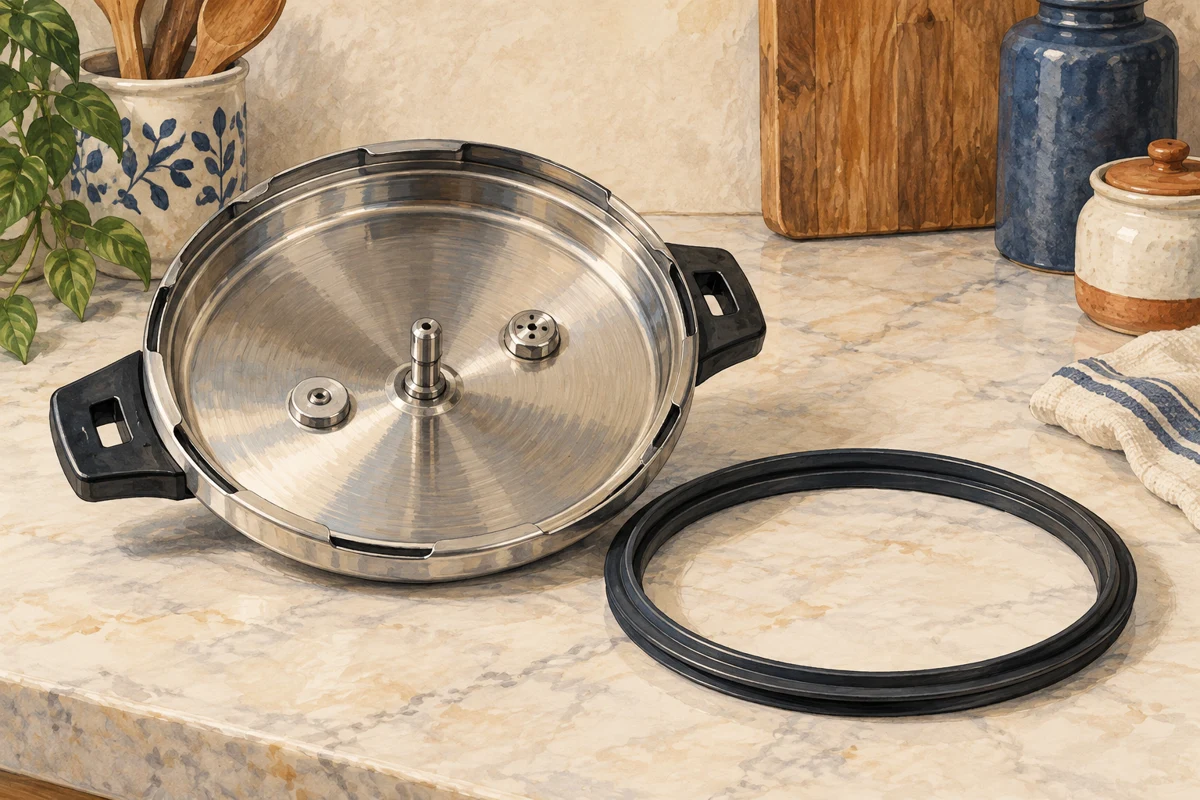
An old gasket may be stretched, compressed or otherwise changed by use. Measuring it and searching for a similar ring can therefore send you towards the wrong part. Begin with the cooker model, size and identifying marks. If you cannot read them, contact the manufacturer with photographs before ordering.
Capacity alone may not be enough. A brand can use different parts for different ranges or versions. Hawkins' parts information, for example, distinguishes genuine components by product details. Treat the current manufacturer's part reference as the specification, not a seller's broad claim that one ring fits everything.
Explain the problem before replacing a part
If the cooker leaks, fails to operate normally or has damaged components, stop using it and seek the advice described in its manual. A gasket is only one part of the system. Replacing it on suspicion may leave another fault unresolved. Do not alter the lid, block a vent or add material to create a tighter seal.
Take useful photographs while the cooker is cool and safely out of use: its identifying label, the lid and the relevant part. Describe what happened without trying to reproduce a fault for a video. Support staff can then tell you whether an owner-replaceable gasket is appropriate or whether inspection is needed.
When an authorised replacement is recommended, buy through a reliable source and keep the packaging until compatibility is confirmed. Compare the part code rather than just the appearance. If the supplied component or instructions differ from what was recommended, resolve that before using the cooker.
Keep the replacement routine simple
Fit and care for the new gasket only as the manufacturer instructs. Some parts are designed for owner replacement; other work belongs with a service centre. Do not stretch, trim, boil, oil or otherwise modify a ring based on generic advice. Instructions for another material or brand may not apply.
Record the correct part reference with the cooker details. This small note avoids having to identify the model again years later. If you keep a spare, store it as directed and inspect its condition before use rather than assuming an unopened packet remains suitable indefinitely.
The aim is not to make an ageing cooker work at any cost. It is to use the correct component in a cooker the manufacturer considers serviceable. If that cannot be established, ask about replacement of the complete appliance instead of collecting more near-matching parts.