When a fine sieve is worth the drawer space
The mesh matters, but so do the rim, balance and bowl beneath it.
Name the task
A fine sieve might strain tea, sift flour or catch small particles from a liquid. Those tasks involve different quantities and working positions. Buy around the repeated job rather than the broad promise that a sieve is useful for everything.
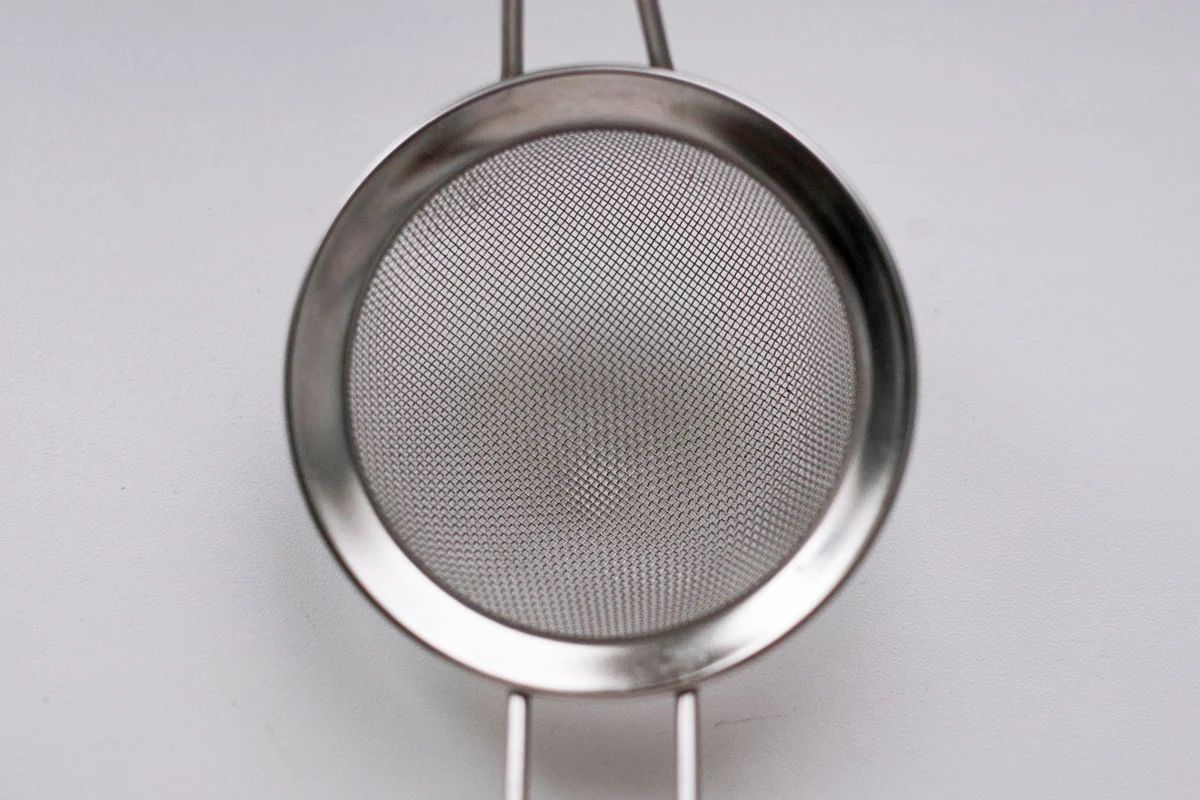
Look closely at the mesh specification and photographs. Fine is a relative description, not a universal opening size. If a particular result matters, such as catching very small particles, ask the manufacturer what the sieve is designed for. A product title alone may not answer that.
Check the support points
Place the intended bowl's measurements beside the sieve's total span. A small resting hook and long handle may support it across one bowl but slip inside a wider one. The rim should sit securely in the arrangement the maker intends. Do not plan to balance a heavy load on a hook that only just reaches.
Handle length changes storage as well. A sieve with a compact basket can still be the longest item in a drawer. Measure the full length and height. If it will hang, ensure the hook location lets it remain clean and avoids repeated knocks that can deform the mesh.
For warm or hot liquids, check material permissions and handle the operation with room for steam and drips. Do not press hard against delicate mesh with an unsuitable tool. A damaged sieve can be difficult to inspect, so examine the surface and rim before use.
Clean before residue settles
Read the washing instructions, including whether a dishwasher is permitted. Small particles can lodge where mesh is folded into the rim. A cleaning routine that reaches those areas is more useful than choosing a finer mesh merely because it sounds more capable.
Let it dry before placing it inside another vessel. If the sieve has a damaged edge, loose wire or a section that cannot be cleaned, replace it as appropriate rather than continuing because the main basket still looks sound.
A single medium sieve may be enough for occasional use. Add a second size when the first one creates a specific inconvenience, such as being too broad to sit over a cup or too small for a mixing bowl. That keeps the drawer connected to actual cooking rather than a complete-looking set.