A home for kitchen knives without a large block
A drawer insert or individual guard can replace a block, provided the blades remain protected and accessible.
Start with the knives that are used
Empty a knife drawer carefully and account for each blade before choosing an organiser. A large block can have many slots without matching the knives you own. Conversely, a compact insert may hold the daily knife and a smaller one neatly while leaving an occasional long blade without a suitable place.
Measure blade length and the full handle span. Do not push a knife into an opening that is too short or too narrow. The storage should support the tool in the way its maker intends and prevent an exposed edge from becoming the thing a hand meets first.
A drawer needs clearance
Check the drawer's internal height with the proposed insert and knives in place. A tall handle can catch on the cabinet above even when the tray fits flat on the base. Leave enough room to grasp the handle without reaching blindly between blades.
Keep knives separate from loose utensils that can strike the edges or hide them. If using individual blade guards, select the correct size and follow their care instructions. A guard should not be a place to trap a damp knife after washing. Children and anyone unfamiliar with the drawer should not be able to encounter a blade unexpectedly; choose secure storage suited to the household.
Wall storage changes the risk
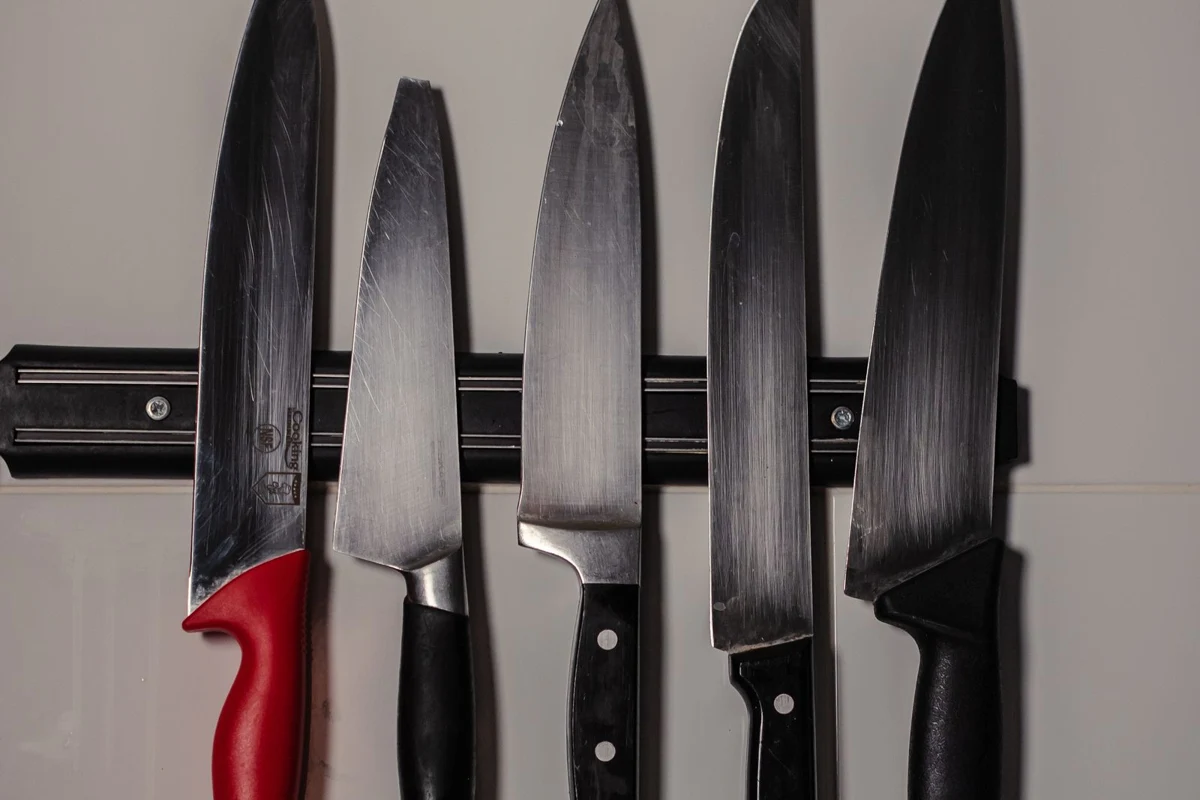
A magnetic strip frees drawer space but brings knives into the open. It requires a suitable product, secure installation and a position away from accidental contact. Do not install it where someone reaches past the blades for a switch or where a falling knife would land in a busy preparation area.
Check that the strip is designed to hold the actual knives and that each sits securely under the maker's directions. A decorative magnet bar is not automatically knife storage. If wall mounting is unsuitable or the household needs enclosed storage, a drawer arrangement may be the better answer.
Plan for more than one user
A storage arrangement should be understandable to anyone who normally cooks in the kitchen. Keep handles visible and return knives to consistent positions. If the drawer is shared with another person, explain the new layout before changing it; an unexpected blade position is an avoidable surprise.
Consider the movement when a knife is being put away as carefully as the movement when it is taken out. A tight insert that requires looking away to hold a drawer open can be awkward. Make sure the drawer stays in a usable position and that the tool can be returned deliberately after appropriate washing and drying.
If young children visit only occasionally, the storage still needs to suit those visits. Do not rely on a normally quiet kitchen remaining inaccessible. Choose secure storage appropriate to the household and visitors, and review it when furniture or room use changes. A compact solution should not trade away control of access simply to remove a block from the counter.
Make cleaning possible
Whatever the system, crumbs and moisture need to be removable. A solid block with deep slots may be less easy to inspect than an open insert. A drawer tray that lifts out lets you clean beneath it, provided you remove the knives safely first.
Try arranging the daily knives in their intended positions before buying a complete set of storage accessories. The successful arrangement is the one that lets a person identify, grasp and return a knife deliberately, without rummaging or moving other sharp tools out of the way.