What a product photograph does not tell you
Use the photographs to inspect details, then use the written specification to establish what is actually supplied.

A product photograph is arranged to show an object clearly or attractively. It may also include props, an unusually spacious room or accessories that are sold separately. The first task is to distinguish the product from the scene around it.
Look for a plain view of the item on its own. A storage basket photographed with a liner and lid may be sold without one of them. A bed photograph can include cushions, sheets and a throw while the listing covers only the cover. The package contents should settle the question.
Look around the edges
Zoom in on the parts that affect use: handles, closures, seams, feet and the underside. A bag shown only from the front tells you little about its opening or internal pockets. A bowl photographed from above hides the base. If there is no useful view, ask for a specific detail rather than requesting more photographs in general.
Check whether all images show the selected variant. Shared listings sometimes use the same gallery for several sizes or colours. A photo of a large model does not establish the proportions of the smaller one. Match any diagram or label to the variant named near the purchase controls.
Screen colour is an approximation. Lighting, editing and your display can change how a fabric or finish appears. For a colour that must match something already at home, a physical swatch or a clearly described exchange option may matter more than another screen image.
Scale needs an independent reference
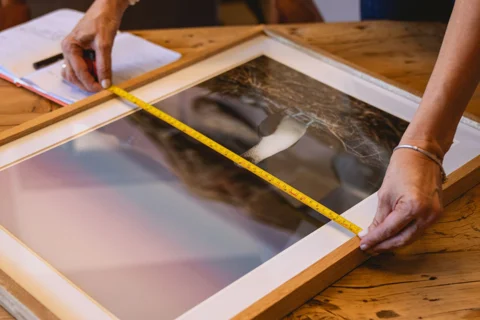
A cup beside a plant is not a reliable measurement because neither object has a known size. Read dimensions and capacity, then compare them with something you own. A hand in a photograph may provide context but cannot replace a measurement.
Customer photos can reveal different angles and ordinary use, but they may show another variant or a product from an earlier batch. Treat them as prompts for questions. If several pictures show the same weak-looking seam, investigate the construction rather than assuming every unit will fail.
Save the written description for an important purchase along with the order details. Images can help explain what attracted you, but a clear record of the selected size, material and included parts is more useful when resolving a mismatch.