What to check before relying on a suction hook
A smooth-looking wall is not always a suitable surface for a suction cup.
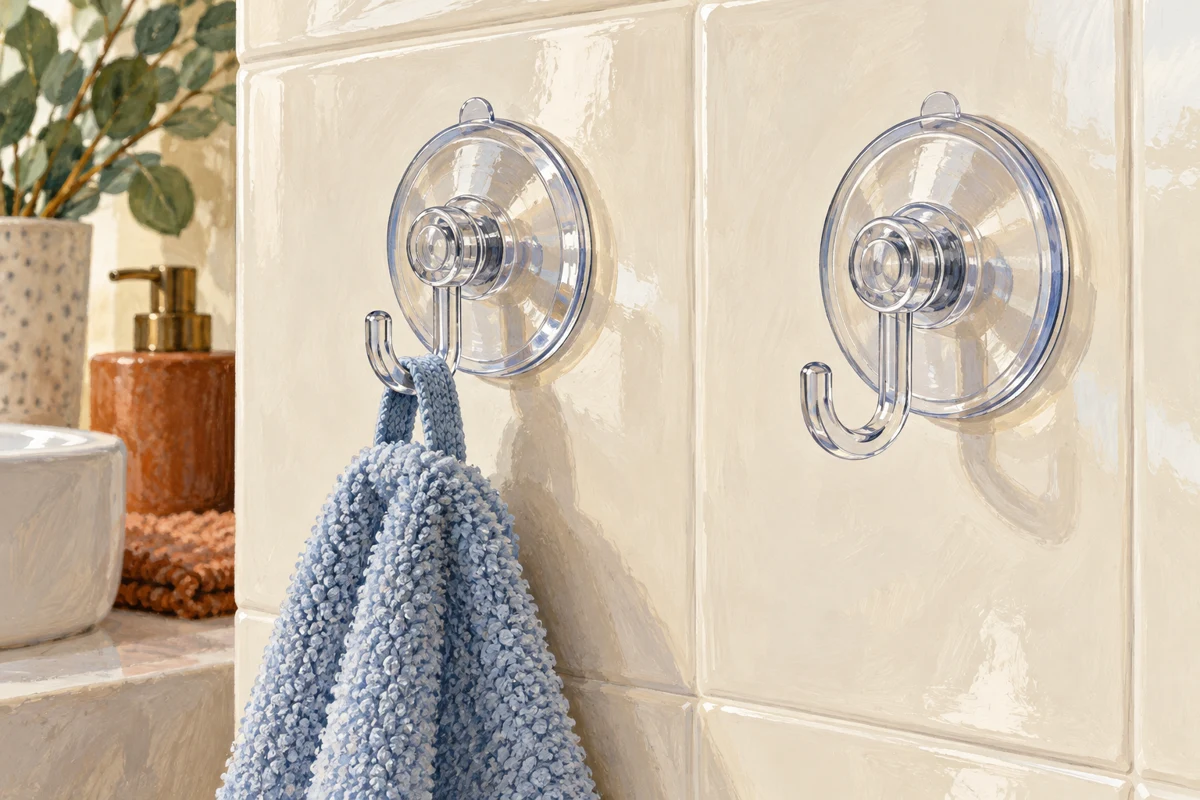
Check the surface description
Suction hooks depend on the surface and on the product's installation method. Smooth glass or compatible tile may be suitable; textured tile, porous material or a grout line can prevent a proper hold. Read the maker's list rather than judging only by how shiny the wall looks.
IKEA's TISKEN range, for example, specifies smooth surfaces such as tiles, mirrors and glass. That is a product-specific starting point, not a promise that any suction hook will hold on any bathroom surface. Check the exact item and its load limit.
Plan for the possibility of release
Choose a location where a falling hook and its contents will not injure someone or break a fragile object. A lightweight cloth is a different load from a glass bottle or heavy bag. Do not use a suction accessory as a grab handle or support for a person.
The rated load is not an invitation to add weight until the hook moves. Follow installation, waiting and maintenance directions, and inspect the cup and contact area as recommended. If it repeatedly releases, stop relying on it and choose a more suitable storage method.
Measure the suction pad, not just the visible hook. It needs the required uninterrupted contact area. A pad that overlaps a grout line can be unsuitable even if the hook itself sits neatly in the centre of a tile.
Clean and prepare the surface only as the instructions specify. Do not add glue, grease or another product to improve the hold unless the manufacturer explicitly calls for it. An improvised treatment can affect both the surface and the accessory without creating a dependable installation.
Removal should be controlled
Use the release method supplied with the hook rather than pulling hard on the object hanging from it. Inspect the cup for damage before reusing it. A cracked or stiff component is not restored simply by pressing it more firmly against the wall.
If a suitable suction surface is absent, a freestanding holder may be less troublesome than repeatedly trying new hooks. The appeal of a no-drill product is understandable, but it still needs the conditions described by its maker to do its job.