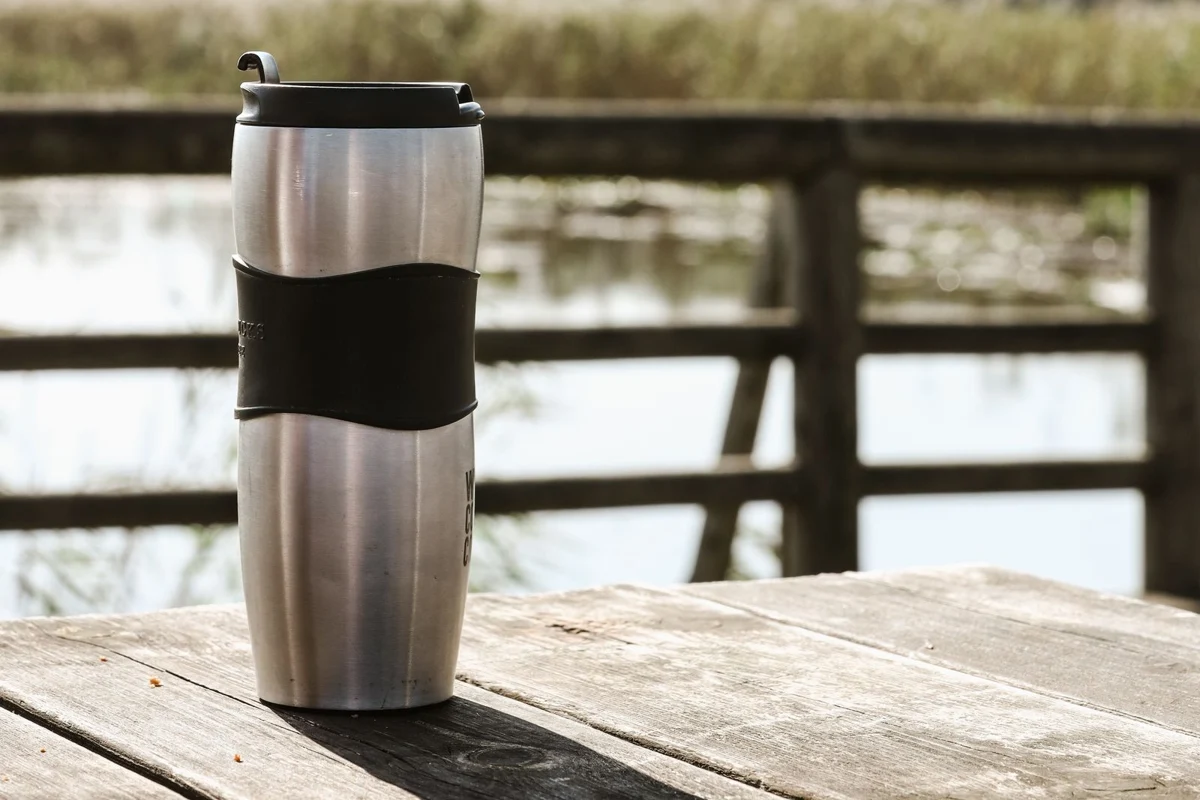
A travel mug lid is part of the purchase
Check how the lid opens, comes apart and goes back together before comparing colours or capacity.
Understand the closure
A lid designed for sipping at a desk may not be intended to travel sideways in a bag. Read the model's description carefully: splash resistance and leak resistance are not interchangeable promises. Follow the specified closing procedure rather than assuming the drinking flap alone seals every opening.
Try the mechanism with clean, dry hands before filling the mug. Check whether a lock, button or twist action is easy to use and whether you can tell when it is fully closed. The lid should not require improvised force to align.
Consider the drinking edge and your normal use. A wide opening may be easy to clean, while a narrow spout may suit drinking on the move when it is safe to do so. Do not let one-handed convenience distract from the need to handle a hot drink carefully.
Look for cleaning access
Read how the lid is dismantled. Some have removable seals and components; others use an integrated design. More pieces are not automatically worse, but you need to be able to remove, clean, dry and replace the permitted parts correctly.
Check whether replacement seals or lids are offered for the exact model. Parts that look similar may not seal correctly. Keep the model number with the instructions rather than trying to identify it later from a colour that appears in several ranges.
Zojirushi's mug information distinguishes different lid types and model features. That variation is a reminder to read the individual manual. Do not assume a mug, lid and seal all share the same dishwasher permission or cleaning method.
Fill and carry as instructed
Observe the specified fill level and permitted contents. Do not add drinks the maker excludes or overfill so the lid displaces liquid when closed. Check that seals are seated correctly after cleaning and that threads or closure surfaces are free of residue.
If checking a new mug's closure at home, follow the maker's procedure and use a safe arrangement over a washable surface. Do not shake a mug of hot liquid to test it. A home check also does not replace correct assembly every time.
Compare the base with the holder you intend to use, and the height with the space under a coffee machine if relevant. Handles and protruding locks can affect fit even when the body diameter appears right.
Let every part dry
After use, clean the mug and lid according to their instructions and dry all permitted removable parts before reassembly or storage. Trapped moisture in a closed lid is easy to overlook when the cup itself looks clean.
If a seal becomes damaged, sticky or misshapen, obtain appropriate advice or the correct replacement rather than relying on tighter closure. A travel mug remains useful when its lid is understandable and maintainable, not merely when the steel body still looks new.