Storage that survives a sheltered balcony
Shelter reduces exposure, but it does not turn an outdoor corner into an indoor cupboard.
Observe the balcony in poor weather
A corner that stays dry on a calm day may receive wind-driven rain. Notice sunlight, splashes, drainage and the route of water during wet weather before choosing storage. Keep essential access and drainage clear; a box should not block the place where water needs to escape.
Check the building's rules and the safe use of the space before adding bulky or heavy items. Storage should not obstruct exits, access equipment or create an unsafe climbing opportunity near a railing. Keep objects secure against wind as appropriate for the setting and product.
Buy for the stated exposure
Indoor storage furniture is not automatically suitable for a sheltered balcony. Read whether the product is intended for outdoor use and what maintenance or covering it requires. Weather-resistant does not mean that every seam, lid and stored object will remain dry under every condition.
IKEA's outdoor maintenance guidance distinguishes materials and care. Use the instructions for your own item rather than assuming all plastic, metal or wood behaves alike. Inspect coatings, hinges and fixings as recommended, particularly where water collects.
Choose contents that belong there
Garden tools and suitable outdoor accessories have different needs from papers, electronics or delicate textiles. Do not move sensitive possessions outdoors simply because an indoor cupboard is full. A closed box can still experience changing temperature and moisture.
If storing cushions or cloth items, follow their care and storage instructions and put them away dry. Check the container periodically. A lid can keep direct debris out while also hiding moisture from view, so occasional inspection remains necessary.
A cover needs somewhere to drain
A protective cover can be part of the manufacturer's care routine, but it should not be treated as a universal waterproof wrapper. Follow fitting and ventilation instructions, and inspect where water may pool. A loose cover can also move in wind. Secure it only in the way intended for the product and location.
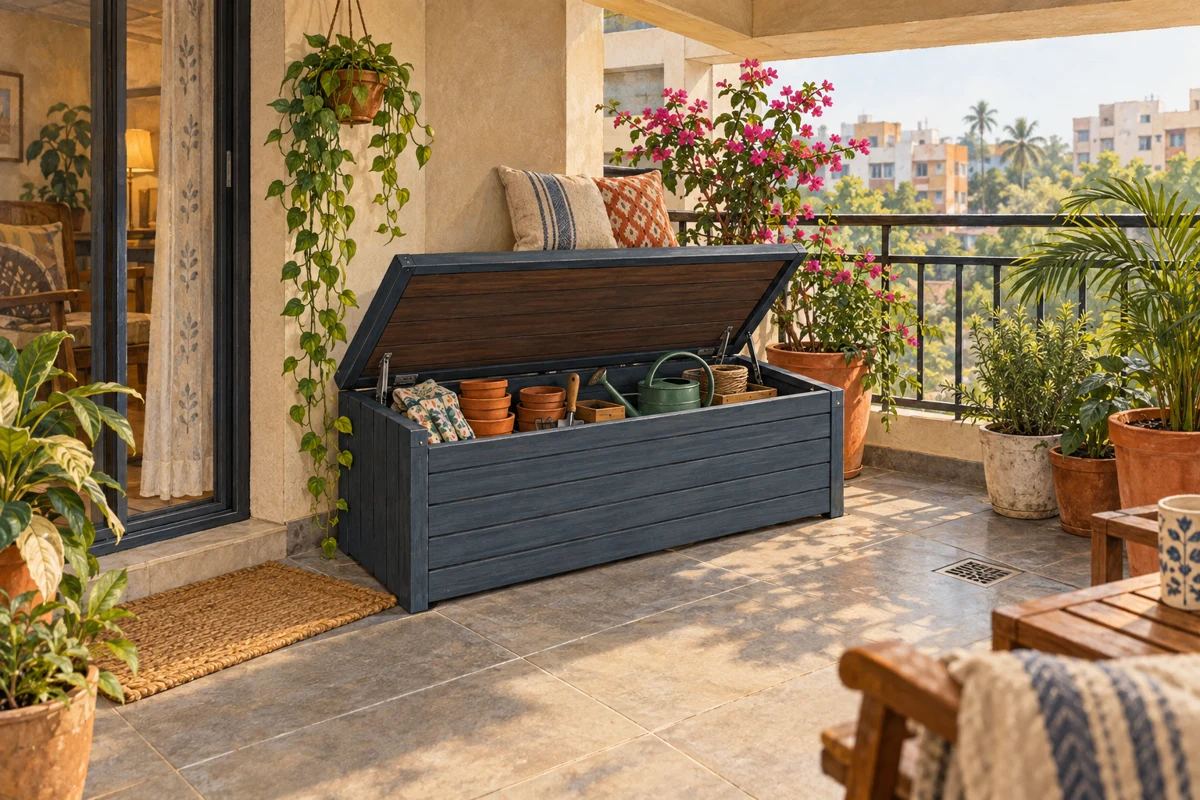
Think about access after rain. If opening the lid tips collected water onto the contents, the storage arrangement needs reconsidering. Keep the opening path clear and inspect the unit under the conditions it will actually experience. Do not test it by exposing sensitive possessions first; begin with an empty, correctly installed unit and the maker's guidance.
Seasonal changes may call for moving suitable items indoors or altering what stays outside. Keeping a short list of balcony contents helps identify anything that has drifted there from an indoor cupboard without a deliberate decision. The balcony's shelter is useful, but it should not become a reason to store every overflow item in an environment it was never designed for.
Leave cleaning access
Make sure the unit can be cleaned around without unsafe lifting or leaning. Space beneath or behind it may collect leaves and dirt. A very tight fit can prevent you from seeing a drainage problem until the storage itself is affected.
Consider the opening movement. A lid should not strike a window or require someone to stand in an awkward position beside the railing. A door needs room to swing without blocking the balcony entrance.
Start with the smallest storage that holds the items genuinely used outside. A large cabinet can take over a balcony intended for sitting, plants or drying laundry. Keeping the collection modest leaves room for the balcony to remain useful as a space, rather than becoming an extension of the indoor overflow.